


Table of Contents Show
UPDATED: APRIL 2026
Current License Fees
$70.38 (PAL) | $93.84 (RPAL)
*Effective March 31, 2026
Est. Processing Time
45 – 120 Days
*Ontario CFO (Orillia) Current Backlog
How Can You Legally Get a Gun License in Ontario?
Getting a gun license in Ontario is a structured legal process designed to ensure that only responsible individuals are allowed to own firearms. Unlike some countries where firearm access may be quicker, Canada follows a strict regulatory system that prioritises safety, accountability, and verification at every stage.
To legally own a firearm, you must apply for a Possession and Acquisition Licence (PAL) through the Royal Canadian Mounted Police. This license is not issued instantly. It involves training, identity verification, background checks, and a mandatory waiting period.
The process may appear complex at first, but once broken down into stages, it becomes manageable. Most applicants who carefully follow the requirements and submit accurate information are able to obtain their license without major issues.
What Are the Requirements for Gun Ownership in Ontario?
Before applying, you must meet specific legal and personal eligibility criteria. These requirements are not just formalities. They are designed to assess whether an individual can safely handle and store firearms without posing a risk to themselves or others.
Applicants must be at least 18 years old to apply for a full license. In addition to age, authorities require applicants to provide two references who have known them for at least three years. These references must not be family members, as the goal is to obtain unbiased insights into the applicant’s behaviour and reliability.
A background check is a central part of the process. This review goes beyond criminal records and may include personal history, behavioural patterns, and any concerns related to violence or instability. Mental health disclosures are also required, and honesty at this stage is critical.
Eligibility Overview
| Requirement | Details |
|---|---|
| Minimum Age | 18 years |
| References | 2 non-family members (minimum 3 years) |
| Background Check | Criminal and personal history review |
| Safety Training | Mandatory completion |
| Mental Health Disclosure | Required |
A certified firearms instructor once explained the importance of accuracy in applications:
“I often see applicants assume the system is just checking criminal records. In reality, it is assessing overall responsibility. Even small inconsistencies can slow things down.”
What Types of Gun Licenses Are Available in Ontario?
Understanding the different types of firearm licenses in Ontario is essential because each license directly determines what firearms you can legally own, how you can use them, and the level of responsibility expected from you.
The licensing system in Canada is deliberately structured to separate standard firearm use from more regulated categories, ensuring that higher-risk firearms require additional training and oversight.
Possession and Acquisition Licence (PAL)
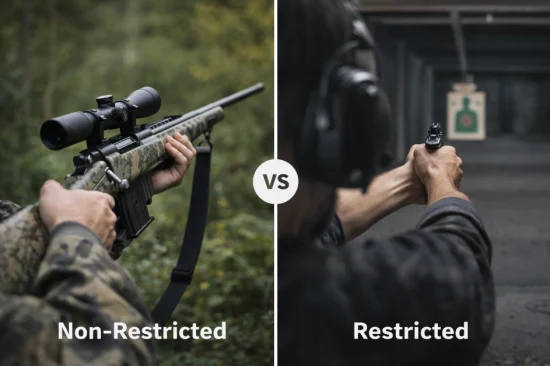
The Possession and Acquisition Licence (PAL) is the most common and widely issued firearm license in Ontario. It allows individuals to legally own and acquire non-restricted firearms, which typically include rifles and shotguns.
These firearms are most commonly used for hunting, farming purposes, and sport shooting activities. For many applicants, the PAL is the first step into legal firearm ownership, as it requires completion of the basic Canadian Firearms Safety Course and a standard background check.
Because non-restricted firearms are considered lower risk compared to restricted categories, the requirements are less complex, but safety and compliance are still strictly enforced.
Restricted Possession and Acquisition Licence (RPAL)
For individuals who want to own restricted firearms, such as handguns or certain semi-automatic firearms, a Restricted Possession and Acquisition Licence (RPAL) is required. This license builds on the PAL but includes additional requirements.
Applicants must complete an extra training course focused specifically on restricted firearms. These firearms are subject to much stricter rules, especially when it comes to storage, transportation, and usage. For example, restricted firearms cannot be freely transported and are generally limited to approved locations such as shooting ranges.
Because of these added responsibilities, the RPAL process involves a more detailed review and reflects a higher level of regulatory control.
Important: The 2026 Status of Restricted Firearms (RPAL)
While you can still apply for and obtain a Restricted Possession and Acquisition Licence (RPAL) in 2026, you must be aware of the National Handgun Freeze.
Since October 2022, the federal government has effectively paused the sale, purchase, and transfer of handguns for the general public.
While an RPAL allows you to possess handguns you already own, you cannot currently acquire new ones unless you fall under very narrow exemptions (such as being a professional trapper or a high-level sport shooter). Most applicants today get an RPAL to be “future-proofed” or to use restricted firearms at a range under specific conditions.
Minor’s License
A Minor’s License is designed for individuals under the age of 18 who wish to use firearms in a controlled and supervised environment. This license does not allow ownership but permits borrowing non-restricted firearms under the direct supervision of a licensed adult.
It is commonly used in situations such as hunting with family members or participating in supervised shooting activities. Parental or guardian consent is mandatory, and safety training is still required to ensure responsible handling from a young age.
This license serves as an introduction to firearm safety and legal responsibility without granting full ownership rights.
License Comparison
| License Type | Firearms Allowed | Key Requirement |
|---|---|---|
| PAL | Rifles and shotguns | Basic safety course |
| RPAL | Restricted firearms including handguns | Additional restricted course |
| Minor’s License | Supervised use only | Parental consent |
What Is the Step-by-Step Process to Apply for a Gun License?
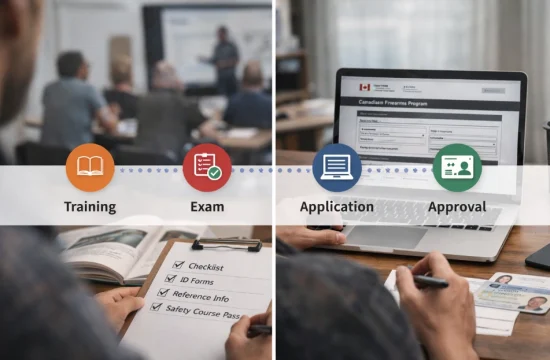
The process of applying for a gun license in Ontario is carefully structured to ensure that every applicant understands not only how to use a firearm, but also the legal responsibilities that come with ownership. Each stage is designed to assess safety awareness, personal reliability, and compliance with Canadian law.
Step 1: Complete the Canadian Firearms Safety Course
The first and most important step is completing the Canadian Firearms Safety Course. This course forms the foundation of responsible firearm ownership and is mandatory for all applicants.
During the training, individuals are taught how to handle firearms safely, how to store them securely, and how to transport them in accordance with the law. The course also covers legal responsibilities, helping applicants understand what is permitted and what is strictly prohibited under Canadian regulations.
This stage is not just a formality. It ensures that every future license holder has a clear understanding of the risks and responsibilities involved.
“In Ontario, firearms training is not just conducted by any instructor; it is strictly managed by the Firearms Safety Education Service of Ontario (FSESO). The FSESO is the professional association of instructors designated by the Chief Firearms Officer (CFO) to deliver the Canadian Firearms Safety Course (CFSC). When booking your course, ensure your instructor is an active member of the FSESO to guarantee your results are recognized for your PAL application.”
Step 2: Pass the Written and Practical Exams
After completing the course, applicants must pass both a written exam and a practical handling test. These assessments are designed to confirm that the applicant can apply what they have learned in real-world scenarios.
The written test evaluates knowledge of safety rules and legal requirements, while the practical exam focuses on proper firearm handling techniques. Passing both components is essential before moving forward with the application.
Step 3: Submit Your Application
Once you have your stamped course reports, do not simply look for a PDF form. The most efficient way to apply is through the RCMP MyCFP Account portal.
The MyCFP portal allows you to upload your digital photo, track your application status in real-time, and pay your fees securely. Using this digital ‘single access point’ significantly reduces the risk of mailing errors and speeds up the CFO’s initial review process.
Step 4: Background Checks and Review
After submission, the application is reviewed by the Royal Canadian Mounted Police in coordination with the Chief Firearms Officer in Ontario.
This stage involves a thorough background check that goes beyond criminal records. Authorities may review personal history, behavioural patterns, and any factors that could indicate a potential risk. The goal is to ensure that only individuals who demonstrate responsibility and stability are approved.
This part of the process can vary in duration depending on how straightforward the applicant’s background is.
Step 5: Mandatory Waiting Period
A mandatory waiting period of at least 28 days applies to all first-time applicants. This period is often referred to as a cooling-off phase and is required by law.
It is designed to provide additional time for background verification and to ensure that applications are not processed impulsively. This waiting period cannot be shortened or bypassed under any circumstances.
Step 6: Approval and License Issuance
If the application meets all requirements and no concerns are raised during the review process, the license is approved and issued. The applicant will then receive their Possession and Acquisition Licence, which is valid for five years.
At this stage, the individual becomes a legally licensed firearm owner and must comply with all storage, transportation, and usage laws.
How Long Does It Take to Get a Gun License in Ontario?
The timeline for obtaining a gun license varies depending on how quickly each stage is completed and how smoothly the background check process proceeds.
There is a mandatory minimum waiting period of 28 days for first-time applicants. However, in practice, most applications take between one and three months to be fully processed. In some cases, delays may extend beyond this timeframe, particularly if additional verification is required.
Processing Timeline
| Stage | Estimated Duration |
|---|---|
| Safety course and exams | 1 to 2 days |
| Application review | Minimum 28 days |
| Full processing time | 1 to 3 months |
Applicants who ensure that their forms are accurate and references are responsive typically experience faster approvals.
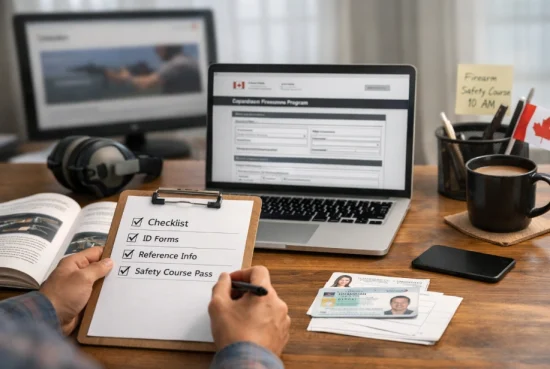
MyCFP Online Application: Your “Digital First” Checklist
Before you log into the RCMP MyCFP portal, ensure you have these four items ready. Missing just one will prevent you from submitting your application:
- Digital Photo: A clear, passport-style photo in JPEG or PNG format (taken within the last 6 months).
- Reference Emails: Valid email addresses for two references who have known you for 3+ years. They must be unique (not related to you).
- FSESO Stamped Reports: Your scanned or digital “Course Reports” from the Firearms Safety Education Service of Ontario.
- 5-Year Residency History: A complete list of addresses where you have lived for the past five years, including start and end dates.
How Much Does a Gun License Cost in Ontario?
As of March 31, 2026, federal firearms fees have been adjusted for inflation under the Service Fees Act. To avoid application delays or rejected payments, ensure you pay the exact current amount.
- Standard PAL (Non-Restricted): $70.38
- Restricted PAL (RPAL): $93.84
- Upgrade (PAL to RPAL): $46.92
Pro-Tip: Most safety courses in Ontario (CFSC) range from $150 to $250, but these are separate from the government licensing fees above.
Where Do You Apply for a Gun License in Ontario?
All firearm license applications in Ontario are processed through the Canadian Firearms Program, managed by the Royal Canadian Mounted Police.
Applicants can begin the process online by accessing forms and guidance, but certain elements, including course completion and document submission, require offline steps. Final approval is issued by the Chief Firearms Officer in Ontario after reviewing all application details.
What Are the Common Mistakes That Delay Approval?
One of the most overlooked aspects of the licensing process is how easily avoidable mistakes can cause significant delays. Many applicants assume that delays are due to system backlogs, but in reality, they are often caused by incomplete or incorrect submissions.
Errors such as missing signatures, incorrect personal history, or references failing to respond can slow down the review process considerably. In some cases, applications may be returned for correction, further extending the timeline.
A first-time applicant shared a common experience:
“I didn’t realise how important the reference section was. One small delay from them held up my entire application.”
What Disqualifies You from Getting a Gun License in Canada?
In Ontario, the Chief Firearms Officer (CFO) assesses more than just a criminal record. Their mandate is to ensure that granting a license does not pose a risk to the applicant or the public.
Beyond serious crimes, the CFO looks for “Public Safety” stressors. These can include:
- Recent Life Instability: Significant events like a recent divorce, separation, or job loss are reviewed closely if they are linked to behavioral concerns.
- Mental Health History: A history of depression or anxiety isn’t an automatic “No,” but the CFO may request a doctor’s note to confirm stability.
- Conjugal Partner Notification: The RCMP is legally required to notify your current or former spouse/common-law partner of your application. Any safety concerns raised by them can trigger an investigation.
Expert Tip: Honesty is the only policy. Failing to disclose a past event is considered “providing false information” and is an automatic, permanent denial.
How Long Does It Really Take? (April 2026 Update)
While the law dictates a minimum 28-day waiting period, the reality of the 2026 backlog in Ontario is different. Currently, the CFO in Orillia is processing a high volume of renewals and new applications.
Current Estimated Wait Times:
- Non-Restricted (PAL): 45 – 70 days.
- Restricted (RPAL): 90 – 120 days (due to more intensive background and reference checks).
How to Speed It Up: Use the MyCFP portal instead of paper. Applications submitted digitally are currently being assigned to a processing officer roughly 20% faster than those sent via mail.
Can You Use a Gun for Self-Defense in Canada?
This is one of the most misunderstood aspects of Canadian firearm law. Unlike some countries, Canada does not generally permit the use of firearms for self-defense in everyday situations.
The law allows force only under strict conditions, where there is an immediate and unavoidable threat. Even in such cases, the level of force must be proportionate. Simply feeling unsafe is not considered sufficient justification.
As a result, firearms in Canada are primarily intended for regulated activities such as hunting and sport shooting, not personal protection.
Can You Get a Gun License Online in Canada?
While parts of the application process can be started online, the entire process cannot be completed digitally. The safety course must be attended in person to ensure proper training, and certain documents must be submitted physically.
Online resources can help applicants prepare, but they cannot replace the mandatory in-person requirements set by law.
What Are the Rules for Storing and Transporting Firearms?
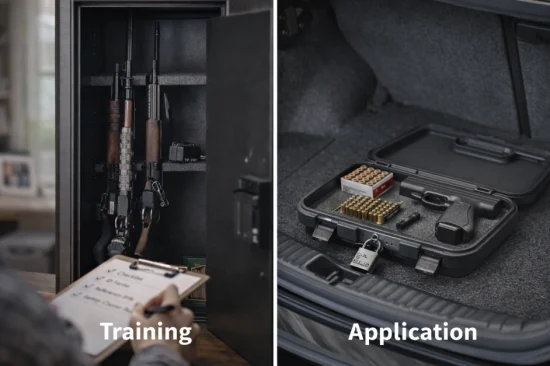
Safe storage and transportation are fundamental responsibilities for every firearm owner in Ontario. These rules are strictly enforced and are considered just as important as the licensing process itself.
Firearms must be stored unloaded and secured with appropriate locking devices. Ammunition must be stored separately, and access must be restricted to authorised individuals only.
Failure to follow these rules can result in serious legal consequences, including license suspension or criminal charges. Authorities treat storage violations as a major risk to public safety.
Why Do Some Applications Get Rejected?
Rejections are often the result of concerns about reliability rather than clear legal disqualification. Authorities assess whether an applicant can be trusted to handle firearms responsibly over time.
Applications may be denied due to inconsistencies in personal history, concerns raised during background checks, or doubts about the applicant’s overall stability.
From analysing multiple cases, one pattern becomes clear. Approval is not just about meeting minimum requirements. It is about demonstrating trustworthiness.
“In most cases I’ve reviewed, rejection happens when authorities are uncertain about the applicant’s reliability, not simply because of a rule violation.”
Who Processes Your License?
While the RCMP manages the federal program, your specific license approval is handled by the Chief Firearms Officer of Ontario, located in Orillia. If your application has exceeded the typical 90-day processing window, you can contact their office directly for an update:
- Location: 50 Andrew Street South, Suite 201, Orillia, ON
- Public Inquiry Line: 1-800-731-4000 (Ext. 7503)
- Local Phone: 705-329-5522
- Email: cfoon@cfp-pcaf.ca
Having this contact information on hand is essential for resolving issues with references or clarifying details in your personal history.
Is It Worth Getting a Gun License in Ontario in 2026?
For individuals interested in hunting or sport shooting, obtaining a gun license remains a valuable option. It provides legal access to firearms and allows participation in regulated activities.
However, the process requires commitment, responsibility, and ongoing compliance with strict laws. Applicants must be prepared to follow regulations not only during the application stage but throughout the entire period of ownership.
For those who approach the process seriously and responsibly, obtaining a gun license in Ontario is achievable and worthwhile.
2026 Compliance: Assault-Style Firearms Program
If you are a current owner of firearms affected by the 2020 or 2024 prohibitions, take note of the Assault-Style Firearms Compensation Program (ASFCP).
- Declaration Deadline: The period to declare firearms for compensation ended on March 31, 2026.
- Amnesty Period: The current amnesty, which protects licensed owners from criminal liability for possessing these now-prohibited items, expires on October 30, 2026.
After this date, any prohibited firearm that has not been surrendered or deactivated will be considered illegal, and owners could face the loss of their PAL and potential criminal charges.