




Table of Contents Show
One of the most common assumptions is that astronauts receive significant bonuses for travelling to space, especially on high-profile missions like Artemis. In reality, this is not the case.
Astronauts do not receive additional pay specifically for going to space. Their salary remains the same whether they are training on Earth or orbiting the Moon.
However, this does not mean the compensation package is limited. Astronauts benefit from a range of government-provided advantages that enhance their overall financial position.
These include coverage for travel and accommodation during missions, comprehensive healthcare, and long-term retirement benefits. In addition, astronauts gain access to world-class facilities and training programmes that would be difficult to quantify financially.
As of April 2026, the world has its eyes on the Artemis II crew—Commander Reid Wiseman, Pilot Victor Glover, and Mission Specialists Christina Koch and Jeremy Hansen.
After launching on April 1 and successfully splashing down in the Pacific on April 10, these four pioneers have just completed the first human voyage to the vicinity of the Moon in over 50 years. While their achievement is historic, their compensation remains surprisingly grounded in Earth-side reality.
A former astronaut once summarised it simply:
“You don’t go to space for the pay—you go because it’s the pinnacle of human exploration.”
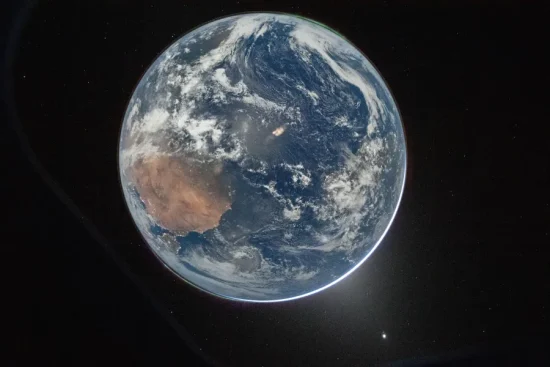
Image Source – https://www.nasa.gov/wp-content/uploads/2026/04/art002e000192.jpg?resize=900,600
The “Hello, World” photograph of Earth taken by Commander Reid Wiseman on April 3, 2026, during the Artemis II outbound journey
Do Artemis II Astronauts Get ‘Hazard Pay’ for the Moon?
A major point of curiosity for many is whether missions of this magnitude come with a ‘bonus.’ The short answer is no. Despite the extreme risks of a 10-day lunar flyby, NASA astronauts receive:
- No Hazard Pay: There is no financial premium for the danger of deep-space travel.
- No Overtime: Astronauts are salaried federal employees; whether they are working 8 hours in Houston or 24 hours in a lunar orbit, their pay remains the same.
- No Mission Bonuses: Unlike private sector executives, there are no performance-based bonuses for reaching milestones like breaking the record for the farthest distance traveled from Earth.
How Does Artemis Astronaut Pay Compare to Canadian Astronaut Salaries?
For readers in Canada, the comparison between NASA and the Canadian Space Agency is particularly relevant. Canadian astronauts are also government employees, and their salaries follow a structured public-sector pay system.
| Agency | Astronaut / Role | Estimated Annual Salary (2026) | Extra Mission Pay? |
| NASA | Senior Astronaut (GS-15) | $152,258 USD | None (No Hazard/OT) |
| CSA | Mission Specialist (Hansen) | $97,100 – $189,600 CAD | None |
| Private | Commercial Pilot | Varies ($200k+ typical) | Often includes bonuses |
While the general GS-13 to GS-15 pay scale ranges from roughly $100,000 to $190,000 depending on location, current 2026 federal records and media analysis of the Artemis II crew suggest a typical senior astronaut salary of approximately $152,258 per year.
For perspective, this is comparable to a mid-to-senior level project manager or a specialized engineer at a major tech firm, roles that carry significantly less physical risk than a 690,000-mile journey through a radiation-filled vacuum.
To put the $152,258 Artemis salary into perspective, these elite explorers earn roughly the same as many senior professionals working 9-to-5 jobs on the ground.
According to 2026 labor data:
- Senior Engineers: A typical Senior Software or Systems Engineer in the U.S. averages $126,557, with top earners in tech hubs often exceeding $168,000—surpassing the base pay of an astronaut.
- Financial Analysts: Experienced financial analysts with 5–7 years of experience now average roughly $113,000, with senior roles often reaching the same $150,000+ bracket as the Artemis II crew.
- Skilled Trades: In many high-demand regions, master electricians and specialized industrial technicians earn six-figure salaries that rival the compensation of those currently orbiting the Moon.
The ‘Artemis gap’ is clear: while the risks and required expertise are astronomical, the paycheck remains grounded in standard federal professional scales.
To better align with top-ranking content and improve reader relatability, you should add these sections to emphasize that being an Artemis astronaut is a prestigious role, not a high-paying one.
1. The Relatability Comparison: “Normal” Jobs vs. Deep Space
Where to add: Insert this immediately after you discuss the NASA salary figures ($152,258). This creates a “shock factor” that keeps readers on the page.
“To put the $152,258 Artemis salary into perspective, these elite explorers earn roughly the same as many senior professionals working 9-to-5 jobs on the ground.
According to 2026 labor data:
- Senior Engineers: A typical Senior Software or Systems Engineer in the U.S. averages $126,557, with top earners in tech hubs often exceeding $168,000m surpassing the base pay of an astronaut.
- Financial Analysts: Experienced financial analysts with 5–7 years of experience now average roughly $113,000, with senior roles often reaching the same $150,000+ bracket as the Artemis II crew.
- Skilled Trades: In many high-demand regions, master electricians and specialized industrial technicians earn six-figure salaries that rival the compensation of those currently orbiting the Moon.
The ‘Artemis gap’ is clear: while the risks and required expertise are astronomical, the paycheck remains grounded in standard federal professional scales.”
2. The “Hansen” Difference (Updated CSA Data)
Where to add: Replace your existing paragraph about the Canadian Space Agency (CSA) to include specific mission-level details for Jeremy Hansen.
“While the NASA crew members follow the U.S. federal GS-scale, the fourth member of the Artemis II crew, Jeremy Hansen, is paid by the Canadian Space Agency (CSA).
Canadian astronaut salaries are categorized into three distinct levels:
- Level I (Training): Starts at approximately $97,100 CAD.
- Level III (Mission-Ready): Experienced astronauts like Hansen, who has served as a Royal Canadian Air Force captain and is now a mission specialist, fall into the highest bracket, which can reach nearly $190,000 CAD.
Even at the top of the Canadian scale, the pay reflects a career-long commitment to public service rather than the massive payouts typically associated with high-risk private-sector aerospace roles.”
| Profession | Yearly Salary (Est. 2026) | Hazard Pay / Bonuses? |
| Artemis II Astronaut | $152,258 | No (Strict Federal Salary) |
| Senior Engineer | $143,500 (75th percentile) | Yes (Stock/Performance) |
| Financial Director | $162,248 | Yes (Annual Bonuses) |
| Master Electrician | $100,000+ (Varies) | Yes (Overtime eligible) |
What Factors Affect How Much Artemis Astronauts Make?
Astronaut salaries are not random; they are influenced by a combination of measurable factors. Experience is one of the most significant. Candidates with years of military service, advanced scientific research, or piloting experience are often placed higher within the GS scale.
Education also plays a role, particularly advanced degrees in fields such as engineering, physics, or medicine. These qualifications can influence both the starting grade and the speed of progression.
Time spent within NASA contributes to steady salary growth. As astronauts gain experience, they move through steps within their grade or advance to a higher grade altogether. While leadership roles such as mission commander carry more responsibility, they do not always result in dramatically higher pay due to the structured nature of the system.
Is Being an Artemis Astronaut Financially Worth It?
From a purely financial perspective, becoming an Artemis astronaut offers a solid but not extraordinary income. The salary is comparable to that of senior engineers, scientists, or military officers in government roles.
However, financial reward is only one aspect of the profession. The role offers unparalleled experiences, including participation in historic missions and contributions to scientific advancement. It also provides global recognition and long-term career prestige.
As one space policy expert noted, “Astronauts trade the possibility of higher private-sector earnings for the chance to be part of history.” This trade-off is central to understanding the value of the career.
It’s important to note that not all Artemis astronauts are on the civilian ‘GS’ pay scale. For military astronauts like Commander Reid Wiseman and Pilot Victor Glover (both U.S. Navy), the pay structure is slightly different:
- Active-Duty Status: They remain on the military pay scale rather than moving to the NASA GS scale.
- Tax Advantages: A significant portion of military pay (such as Basic Allowance for Housing or BAH) is often tax-free, which can result in higher take-home pay compared to a civilian astronaut with the same gross salary.
- Retirement: They continue to accrue years toward a military pension, which is often considered one of the most stable retirement plans in the U.S. government.
What Is the Artemis Program and Why Does It Matter for Astronaut Careers?
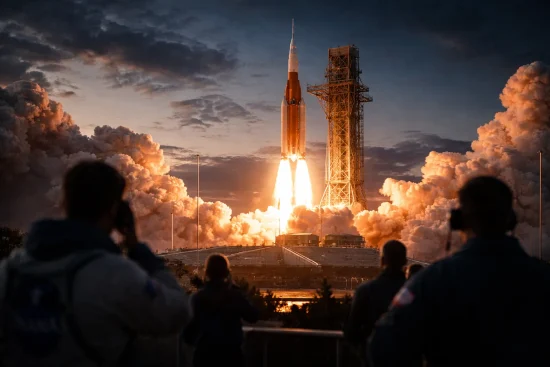
The Artemis program is NASA’s ambitious effort to return humans to the Moon and establish a long-term presence there. It represents a major shift in space exploration, with plans that extend beyond lunar missions to future journeys to Mars.
For astronauts, Artemis is more than just a mission series. It is a defining career opportunity. Participation in such a programme can shape an astronaut’s professional legacy and open doors to leadership roles within NASA and the broader space industry.
Although the salary structure does not change, the career impact is significant. Being part of Artemis places astronauts at the forefront of one of the most important scientific initiatives of the 21st century.
What Happens if a Mission is Delayed?
A common question is whether astronauts get paid more if a mission lasts longer than planned. The precedent set by the Boeing Starliner mission (2024–2025) provides a clear answer: No.
NASA astronauts Butch Wilmore and Suni Williams launched for an 8-day mission in June 2024 but ended up spending 286 days in space due to technical issues. Despite their stay being extended by nearly nine months, they received zero additional salary, no overtime, and no hazard pay.
As federal employees on ‘travel orders,’ the only extra compensation they received was a standard government incidentals allowance—roughly $5 per day, totalling just over $1,400 for nearly a year in orbit. This highlights the ‘public service’ nature of the role: the pay is fixed, regardless of the mission’s duration or danger.
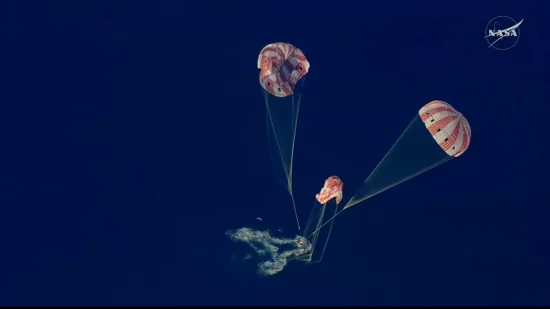
The Artemis II Orion capsule, Integrity, safely splashing down in the Pacific Ocean on April 10, 2026, following its 10-day lunar mission.
What Benefits Do Artemis Astronauts Receive Beyond Salary?
While base salary is an important factor, the overall compensation package for astronauts extends far beyond their annual pay.
Astronauts receive comprehensive healthcare coverage, pension plans, and paid leave, reflecting their status as federal employees. They also benefit from job stability and long-term security, which are often less certain in the private sector.
In addition, the role provides access to cutting-edge technology, advanced training programmes, and international collaboration opportunities. These benefits contribute to a well-rounded compensation package that supports both financial stability and professional growth.
While the base salary of $152,258 may seem modest for the risks involved, the ‘on-mission’ benefits act as a significant financial buffer. For the duration of the Artemis II mission, NASA covers:
- Zero Living Expenses: Every meal (space food), ‘lodging’ (the Orion capsule), and ‘transportation’ (the SLS rocket) is fully funded by the government.
- Travel Orders: Like any federal employee on a business trip, astronauts are on official travel status, meaning their essential needs are provided for without dipping into their personal salary.
- Healthcare: They receive comprehensive, world-class medical coverage that continues long after they return to Earth, covering any long-term effects of space radiation or microgravity.
Could Artemis Astronaut Salaries Increase in the Future?
Astronaut salaries are tied to the federal GS pay scale, which is periodically adjusted to reflect economic conditions such as inflation. These adjustments can lead to gradual increases in earnings over time.
There is also growing interest in the space industry from private companies, which may influence public-sector pay indirectly. As competition for talent increases, there could be pressure to offer more attractive compensation packages.
However, any significant changes would require policy decisions at the government level. For now, astronaut salaries remain stable and predictable within the existing framework.
FAQs
How much do Artemis astronauts make per month?
Artemis astronauts typically earn between $7,000 and $13,500 per month before taxes, depending on their GS level and experience.
Do astronauts get hazard pay?
No, astronauts do not receive hazard pay. Their compensation is fixed under the federal pay structure.
Are astronauts paid while in space?
Yes, astronauts continue to receive their regular salary while in space, with no additional mission-based pay increase.
What is the highest astronaut salary?
The highest typical salary for NASA astronauts is around $160,000 or more per year at the upper GS-13 levels.
Do Canadian astronauts earn more than NASA astronauts?
Canadian astronauts earn comparable salaries when adjusted for currency differences, with similar ranges overall.
How long does it take to reach GS-13?
It usually takes several years of experience and performance progression to move from GS-12 to GS-13.
Do private astronauts earn more than NASA astronauts?
In many cases, private-sector astronauts or space professionals may earn higher salaries, but this varies widely depending on the organisation.