




Table of Contents Show
Prime Minister Mark Carney’s temporary suspension of Canada’s federal fuel excise tax is intended to provide short-term relief to households and businesses facing higher transportation costs.
The suspension began on 20 April 2026 and remains in force until 7 September 2026, inclusive. During this period, the federal excise tax is reduced to zero on gasoline, diesel and specified aviation fuels.
For regular gasoline, the suspended tax is normally 10 cents per litre. For diesel, it is normally 4 cents per litre. However, that does not necessarily mean every petrol station will reduce its displayed price by exactly the same amount.
This guide explains the dates, fuels covered, potential savings, business implications and the difference between the excise-tax suspension and Canada’s former consumer carbon charge.
What Did Carney Suspend?
Prime Minister Mark Carney suspended the federal fuel excise tax on gasoline, diesel and certain aviation fuels from 20 April to 7 September 2026.
The normal federal tax rates return on 8 September 2026 unless the government introduces and passes a further legislative change.
The suspension removes:
- 10 cents per litre from the federal excise-tax rate on unleaded gasoline;
- 4 cents per litre from the rate on diesel;
- 10 cents per litre from unleaded aviation gasoline;
- 11 cents per litre from leaded aviation gasoline; and
- 4 cents per litre from other aviation fuel.
The government announced the measure on 14 April 2026. It was subsequently included in Bill C-30, which received Royal Assent on 18 June 2026. The measure is therefore in law rather than remaining only a government proposal.
Based on 600 litres of gasoline and full pass-through of the tax reduction.
Carney Fuel Tax Suspension: Key Dates and Details
| Detail | Confirmed information |
|---|---|
| Announcement date | 14 April 2026 |
| Suspension begins | 20 April 2026 |
| Final day at the zero rate | 7 September 2026 |
| Normal rates return | 8 September 2026 |
| Duration | 141 days |
| Gasoline reduction | 10 cents per litre |
| Diesel reduction | 4 cents per litre |
| Legal measure | Bill C-30 |
| Royal Assent | 18 June 2026 |
| Government relief estimate | More than C$2.4 billion |
| PBO fiscal-cost estimate | C$2.1 billion |
| PBO estimated average household saving | C$124 |
The dates and rates are confirmed in the federal government’s fuel excise-tax backgrounder.
Canada Fuel Tax Suspension Timeline
Select each date to see how the temporary fuel excise-tax suspension progressed from announcement to implementation.
14 April 2026 Suspension announced
20 April 2026 Temporary zero rate begins
18 June 2026 Bill C-30 receives Royal Assent
7 September 2026 Final day of the suspension
8 September 2026 Standard rates return
What is the Federal Fuel Excise Tax?
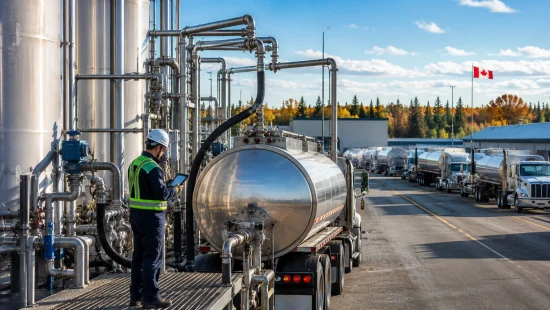
The federal fuel excise tax is a fixed tax charged on specified petroleum products under Canada’s Excise Tax Act.
Unlike a percentage-based sales tax, it is generally calculated as a set number of cents for every litre. Before the temporary suspension, the federal rate was 10 cents per litre for gasoline and 4 cents per litre for diesel.
The tax is usually paid earlier in the fuel supply chain by a manufacturer, producer, wholesaler or importer. It is then embedded in the price charged further down the chain, including the retail price seen by motorists.
This helps explain why the suspension is not delivered as a direct rebate or separate government payment. The intended saving should instead appear through lower fuel costs when the tax reduction is passed through the supply chain.
Business in Canada’s guide to why gas prices are high in Canada provides additional background on the other components that can influence pump prices.
Which Fuels Are Included in the Suspension?
The temporary zero rate applies to the following fuels when the excise tax becomes payable during the eligible period:
| Petroleum product | Normal rate | Temporary rate |
|---|---|---|
| Unleaded gasoline | 10 cents per litre | 0 cents |
| Unleaded aviation gasoline | 10 cents per litre | 0 cents |
| Leaded aviation gasoline | 11 cents per litre | 0 cents |
| Diesel fuel | 4 cents per litre | 0 cents |
| Other aviation fuel | 4 cents per litre | 0 cents |
The relief generally applies to affected fuel delivered or imported after 19 April 2026 and before 8 September 2026.
Which Fuels Are Not Affected?
The suspension does not represent a tax reduction for every energy product used in Canada.
Heating oil was already exempt from this federal excise tax. Natural gas and propane are also not subject to this particular tax, so there is no corresponding temporary excise-tax reduction for those products.
Provincial gasoline and diesel taxes are separate. Unless a provincial government announces its own measure, provincial taxes continue to apply.
How Much Could Canadian Drivers Save?
The simplest way to estimate the direct potential saving is to multiply the number of eligible litres purchased by the suspended rate.
How Much Could Canadian Drivers Save?
| Gasoline purchased | Maximum excise-tax reduction |
|---|---|
| 40 litres | C$4 |
| 50 litres | C$5 |
| 100 litres | C$10 |
| 500 litres | C$50 |
| 1,000 litres | C$100 |
A motorist filling a 50-litre tank could therefore receive up to C$5 in excise-tax relief per fill-up, assuming the full reduction reaches the retail price.
Diesel Savings Examples
| Diesel purchased | Maximum excise-tax reduction |
|---|---|
| 50 litres | C$2 |
| 80 litres | C$3.20 |
| 500 litres | C$20 |
| 5,000 litres | C$200 |
| 25,000 litres | C$1,000 |
The diesel saving is smaller per litre because the normal federal diesel excise-tax rate is 4 cents rather than 10 cents.
What is the Average Household Saving?
The Office of the Parliamentary Budget Officer estimated that the suspension would produce an average tax saving of C$124 per Canadian household.
That figure is an average rather than a guaranteed payment. A household that owns several vehicles, drives long distances or operates fuel-powered equipment may receive more relief. A household that rarely drives or owns an electric vehicle may receive considerably less.
The PBO estimated that savings could range from approximately C$59 for households in the lowest income quintile to C$211 for households in the highest quintile, reflecting differences in fuel consumption.
However, lower-income households may still receive more relief relative to their income because transportation costs can take up a larger proportion of their household budget.
Readers looking for broader household budgeting ideas can also review these practical suggestions on how to save money in Canada.
Why Might Petrol Prices Not Fall by Exactly 10 Cents?
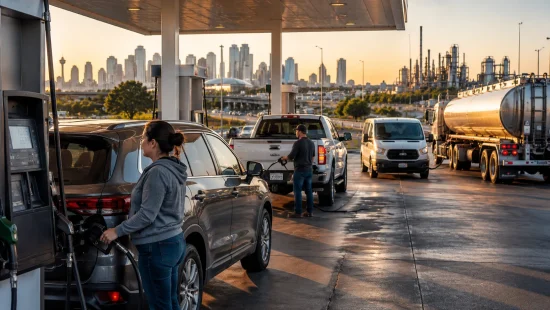
The federal government describes the measure as being expected to reduce regular gasoline costs by 10 cents per litre and diesel costs by 4 cents per litre. Those figures represent the excise tax removed, not a guarantee concerning the final posted price at every station.
Several factors can affect the price that motorists actually see.
Existing Tax-paid Inventory
The Canada Revenue Agency states that a business holding fuel on which excise tax had already been paid on 20 April 2026 is not entitled to an inventory refund.
This means a station or supplier may initially sell fuel that entered the supply chain before the zero rate took effect. The price effect could therefore take time to appear as older inventory is replaced.
The same CRA rules state that no additional excise tax becomes payable merely because a business still holds zero-rated inventory when the normal rate returns on 8 September.
Wholesale and Crude-oil Prices
The retail price of gasoline depends on more than tax. It can also reflect:
- crude-oil prices;
- refinery costs and capacity;
- transportation expenses;
- wholesale margins;
- the Canadian-dollar exchange rate;
- regional supply conditions;
- local competition; and
- retailer margins.
A sharp increase in one of those costs could offset part or all of the tax reduction. Conversely, declining oil or wholesale prices could produce a larger overall fall.
Business in Canada has separate explainers covering Ontario gas-price factors and where Canada gets its oil.
The Pass-through Assumption
The PBO’s household-saving estimate assumes that 100 per cent of the tax saving is passed on to households.
The PBO acknowledged that some relief could instead be retained elsewhere in the supply chain. Its C$124 average should therefore be viewed as an estimate based on full pass-through, not as a guaranteed household result.
Is This the Same as Removing the Carbon Tax?
No. The temporary excise-tax suspension and the removal of the federal consumer fuel charge are separate measures.
The federal consumer fuel charge was set to zero from 1 April 2025. That measure related to consumer-facing carbon pricing under the Greenhouse Gas Pollution Pricing Act.
The 2026 suspension concerns the longstanding federal excise tax imposed under the Excise Tax Act.
In practical terms:
| Measure | Relevant date | Current position |
|---|---|---|
| Federal consumer fuel charge | Set to zero from 1 April 2025 | No longer charged to consumers |
| Federal fuel excise tax | Temporarily set to zero from 20 April 2026 | Returns on 8 September 2026 |
| Provincial fuel taxes | Varies by province | Generally remain in place |
| Industrial carbon pricing | Separate system | Not removed by this measure |
The Department of Finance confirmed that the consumer fuel charge ceased to apply from 1 April 2025, while industrial carbon-pricing systems continued separately.
Describing the 2026 measure simply as another “carbon tax cut” would therefore be inaccurate.
How Could the Suspension Affect Canadian Businesses?
The direct benefit depends heavily on how much gasoline or diesel a company uses and how much of the tax reduction is reflected in supplier prices.
Fuel-intensive businesses are likely to have the greatest potential exposure to the change.
Transport, Courier and Delivery Businesses
Trucking, delivery, taxi, ride-hailing, field-service and distribution companies may see lower fuel expenses during the 141-day suspension.
For example, a company purchasing 25,000 litres of diesel during the eligible period could receive up to C$1,000 in federal excise-tax relief, provided the full reduction is passed through.
Businesses comparing transport providers may also find Business in Canada’s guide to shipping companies in Canada useful.
Construction and Trade Businesses
Construction companies, landscapers, maintenance providers and mobile trades often use fuel for trucks, vans, machinery and generators.
Although the diesel reduction is only 4 cents per litre, the total saving can become meaningful when a business operates several vehicles or consumes large volumes.
A gasoline-powered fleet using 5,000 litres during the suspension could receive up to C$500 in excise-tax relief.
Agriculture and Food Distribution
Farmers, food processors, wholesalers and distributors may experience some reduction in transportation or operating costs.
However, lower fuel tax does not automatically mean grocery prices will fall by an equivalent amount. Fuel is only one part of the final cost of food, alongside labour, packaging, refrigeration, rent, processing and other transportation expenses.
Aviation-related Businesses
The measure also covers eligible aviation gasoline and other aviation fuels. Airlines, flight schools, charter operators and aviation-service businesses may therefore receive relief when buying qualifying fuel during the suspension period.
The effect on fares or customer charges will depend on operating costs, contracts, hedging arrangements and the extent to which savings are passed on.
What Should Businesses Do During the Fuel-tax Suspension?

Businesses should not assume that every litre automatically generates the full headline saving. A more reliable approach is to document actual costs.
Useful steps include:
- Recording litres purchased: Fuel-card and supplier reports can show total gasoline and diesel use during the eligible period.
- Comparing pre- and post-suspension invoices: Businesses can examine whether supplier prices reflect the reduced federal rate.
- Separating tax changes from market changes: Wholesale and retail prices may move independently of the tax.
- Updating forecasts for September: Budgets should reflect the return of the normal federal rates on 8 September.
- Reviewing customer contracts: Companies with fuel surcharges or cost-adjustment clauses should determine how temporary tax relief affects those agreements.
- Keeping appropriate records: Businesses subject to excise-tax filing requirements should continue meeting their reporting obligations.
The CRA confirms that taxpayers required to file excise-tax returns must continue filing during the zero-rate period, even when the excise tax payable is zero.
Realistic Savings Example for a Canadian Business
Consider a regional service company operating eight gasoline-powered vans.
Suppose the fleet uses 1,200 litres of gasoline each month. Over approximately four and a half months, it may purchase around 5,400 litres during the suspension.
The maximum direct excise-tax reduction would be:
5,400 litres × C$0.10 = C$540
That figure represents the maximum excise-tax component removed. It does not account for:
- changes in the market price of gasoline;
- differences between suppliers;
- provincial taxes;
- fuel purchased outside the qualifying period; or
- any portion of the saving not passed through.
The example demonstrates why volume matters. The saving on one tank may appear modest, but repeated purchases across a commercial fleet can accumulate.
How Much Will the Suspension Cost the Federal Government?
Finance Canada estimated that the measure would provide more than C$2.4 billion in total tax relief during 2026.
The PBO separately estimated a C$2.1 billion budgetary cost for 2026–27.
These figures should not be confused with guaranteed consumer savings. They are government-revenue and fiscal estimates produced using different assumptions and methods.
The PBO’s assessment also projected that lower gasoline prices could increase gasoline consumption by approximately 435 million litres compared with a scenario in which the tax remained in place.
What Happens on 8 September 2026?
The temporary zero rate ends after 7 September.
Beginning on 8 September 2026, the federal excise tax returns to:
- 10 cents per litre for unleaded gasoline;
- 10 cents per litre for unleaded aviation gasoline;
- 11 cents per litre for leaded aviation gasoline;
- 4 cents per litre for diesel; and
- 4 cents per litre for other aviation fuel.
The return of the tax could place upward pressure on pump prices, but the displayed change may not happen uniformly. Existing inventories, wholesale prices and competitive conditions could affect the timing and size of retail adjustments.
Households and businesses should avoid treating summer 2026 fuel costs as a permanent baseline.
Common Misunderstandings to Avoid
“All Canadian Fuel Taxes Have Been Suspended”
Only the specified federal excise-tax rates are temporarily set to zero. Provincial fuel taxes and applicable sales taxes remain separate.
“Every Petrol Station Must Cut Prices by Exactly 10 Cents”
The removed gasoline tax equals 10 cents per litre, but the final retail price is influenced by supply costs, market conditions and pass-through decisions.
“the Suspension is the Same as Cancelling the Carbon Tax”
The consumer fuel charge was set to zero in April 2025. The 2026 measure suspends a different federal excise tax.
“the Tax Has Been Permanently Abolished”
The measure is temporary. The normal rates are scheduled to return on 8 September 2026.
“Every Household Will Receive C$124”
The C$124 figure is a PBO estimate of average household tax savings. It is not a direct payment or guaranteed individual amount.
Key Takeaways
Prime Minister Mark Carney’s fuel-tax measure temporarily reduces the federal excise-tax rate to zero from 20 April through 7 September 2026.
Gasoline receives a 10-cent-per-litre reduction, while diesel receives a 4-cent-per-litre reduction. Specified aviation fuels are also included.
The measure is legally implemented through Bill C-30, which received Royal Assent on 18 June 2026.
Potential savings depend on fuel consumption and whether suppliers and retailers pass through the full tax reduction. Provincial fuel taxes remain separate, and other market forces continue to influence pump prices.
For households, the PBO estimates an average saving of C$124. For businesses, the value depends primarily on fleet size, fuel type and litres purchased before the normal rates return on 8 September.
Frequently Asked Questions
When Did Carney Suspend the Fuel Tax?
The federal excise-tax suspension took effect on 20 April 2026 after being announced by Prime Minister Mark Carney on 14 April.
When Does Canada’s Fuel-tax Suspension End?
The zero rate remains in effect through 7 September 2026. The normal federal rates return on 8 September.
How Much is the Gasoline Tax Reduction?
The federal excise-tax rate on unleaded gasoline is temporarily reduced from 10 cents per litre to zero.
How Much is the Diesel Tax Reduction?
The federal diesel excise-tax rate is temporarily reduced from 4 cents per litre to zero.
Will Every Driver Save 10 Cents Per Litre?
Not necessarily. The tax component is reduced by 10 cents on gasoline, but actual pump prices also depend on inventories, crude-oil prices, wholesale costs and retailer decisions.
Are Provincial Fuel Taxes Suspended?
No general suspension of provincial fuel taxes is included in the federal measure. Provincial rates and relief programmes are determined separately by each province.
Is the Fuel Excise Tax the Same as the Carbon Tax?
No. The consumer fuel charge was set to zero from 1 April 2025. The temporary 2026 measure concerns the separate federal fuel excise tax.
Does the Suspension Apply to Aviation Fuel?
Yes. Eligible unleaded aviation gasoline, leaded aviation gasoline and other aviation fuel are included in the temporary zero rate.
Is Heating Oil Included?
Heating oil does not receive a new reduction because it was already exempt from this federal excise tax.
How Much Could a Business Fleet Save?
The amount depends on fuel use. A gasoline fleet purchasing 5,000 litres could receive up to C$500 in excise-tax relief, while a diesel fleet purchasing 25,000 litres could receive up to C$1,000.
Sources