


Table of Contents Show
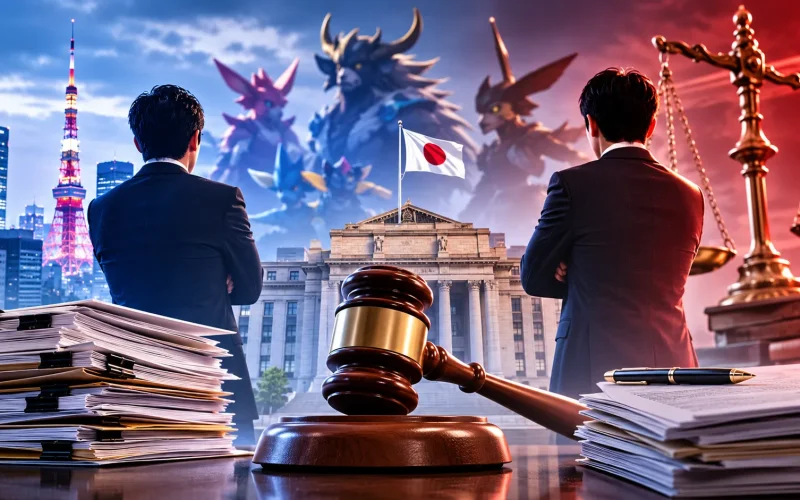
Nintendo and The Pokémon Company have suffered a significant patent setback connected to their lawsuit against Palworld developer Pocketpair. In July 2026, the Japan Patent Office sustained the rejection of a divisional patent application covering an in-game monster-capturing system after finding that the claimed mechanics lacked an inventive step.
The decision matters because the rejected application belongs to the same wider patent family as rights connected to the Palworld dispute. However, it does not mean that Nintendo has lost the lawsuit. The rejection concerns a separate application, not the three granted Japanese patents currently identified in the Tokyo court case.
That distinction is essential: Nintendo’s legal position may have become more difficult, but the court proceedings remain active and the asserted patents have not automatically been cancelled.
What is the Nintendo Palworld Lawsuit About?
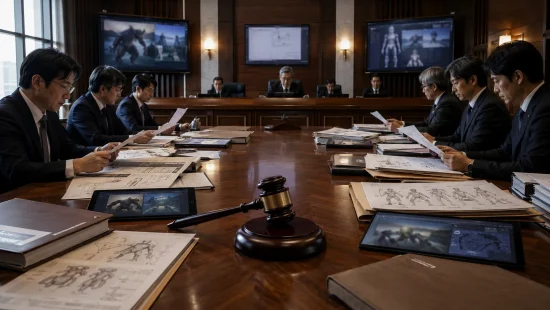
Nintendo and The Pokémon Company filed a patent infringement lawsuit against Pocketpair in the Tokyo District Court on 18 September 2024.
According to Nintendo’s official lawsuit announcement, the companies are seeking an injunction and compensation for alleged infringement of multiple patent rights by Palworld. The filing is based on gameplay-related patents rather than a conventional copyright claim that Pocketpair copied Pokémon character artwork.
Pocketpair subsequently identified the three patents involved as:
| Japanese patent | Application date | Registration date |
|---|---|---|
| Patent No. 7545191 | 30 July 2024 | 27 August 2024 |
| Patent No. 7493117 | 26 February 2024 | 22 May 2024 |
| Patent No. 7528390 | 5 March 2024 | 26 July 2024 |
Nintendo and The Pokémon Company are each seeking ¥5 million, plus late-payment damages, as well as an injunction against the alleged infringement. These figures come from Pocketpair’s November 2024 report on the patent litigation.
The monetary claim is relatively modest compared with the commercial scale of the companies involved. The potentially more consequential demand is the injunction, which could affect how Palworld is developed or distributed if Nintendo succeeds.
What Patent Application Did the Japan Patent Office Reject?
The latest setback involves divisional patent application No. 2026-019762, which describes an in-game monster-capturing system.
A divisional application is created when an applicant separates material from an earlier patent application and pursues it in another filing. Divisional applications can share technical content and priority history with related patents while containing different claims.
In July 2026, the Japan Patent Office sustained its rejection of this application after considering Nintendo’s objections. The examiner concluded that the claimed system lacked an inventive step, relying partly on a 2013 gameplay video of an unofficial fan project called Pokémon Generations. The footage showed a player selecting and throwing a ball-like object to capture a creature.
Nintendo argued, among other points, that the fan-made game infringed its copyright and should not have been treated as an authorised Pokémon product. The examiner’s response was that the copyright status of the reference did not determine whether the gameplay shown in it could be considered when assessing inventive step.
In other words, an unauthorised work can still potentially demonstrate that a technical idea or gameplay process was publicly known before a later patent claim.
Why is the Rejection a Major Legal Blow for Nintendo?
The rejection is damaging for several reasons, even though it does not directly decide the court case.
1. The Patent Office Rejected Nintendo’s Inventive-step Argument
A patent normally cannot protect an idea simply because the applicant describes it in detailed legal language. The claimed invention must satisfy the relevant patentability requirements, including novelty and inventive step.
The Japan Patent Office’s position indicates that at least one examiner was not persuaded that the monster-capturing system in this application represented a sufficiently inventive advance over previously available material.
For Canadian readers, the concept is broadly familiar. The Canadian Intellectual Property Office explains that a Canadian invention must be new, useful and inventive, meaning that it cannot be obvious to a person with ordinary skill in the relevant field. Japanese and Canadian laws are not identical, but both systems examine whether earlier knowledge undermines a patent claim.
2. It is Not the First Related Application to Encounter Prior-art Problems
In October 2025, another Nintendo application connected to the same wider patent strategy, application No. 2024-031879, received a non-final rejection for lack of inventive step.
The references reportedly considered in that examination included earlier games such as ARK: Survival Evolved, Monster Hunter 4, Pocketpair’s own Craftopia, Kantai Collection and Pokémon GO. That application was significant because it sat within a patent-family structure connected to two patents asserted against Pocketpair.
One rejected application does not automatically invalidate its relatives. Nevertheless, repeated objections involving similar gameplay concepts can give Pocketpair additional material for arguing that Nintendo’s claimed inventions were already known or were obvious combinations of existing mechanics.
3. The Examiner Rejected One of Nintendo’s Central Responses
Nintendo’s copyright objection did not persuade the examiner because patent validity and copyright infringement answer different questions.
Copyright generally concerns the protected expression of a work, such as art, music, writing or source code. A patent can protect a qualifying invention or technical process. Material might infringe copyright while still demonstrating that a particular gameplay method had already been publicly disclosed.
This distinction weakens any argument that unauthorised fan material must be ignored solely because it was produced without the intellectual-property owner’s permission.
4. The Dispute is Increasingly Focused on Prior Art
Pocketpair’s defence has included assertions that the patents are invalid. Prior art is therefore not a minor procedural issue; it appears to be one of the central battlegrounds.
Prior art can include earlier patents, publications, products, videos, software and other publicly available material capable of showing what was already known. Canada also permits third parties to submit relevant prior art to the Canadian Intellectual Property Office when they believe an application lacks novelty or inventiveness.
For game developers, the controversy illustrates why archived gameplay footage, old software builds, mod documentation and dated online videos can become important evidence years later.
Did Nintendo Lose the Palworld Lawsuit?
No.
The rejected application is not the same thing as a registered patent being invalidated by the Tokyo District Court. Reporting on the July 2026 notice specifically states that the rejection does not cancel the registered patent directly asserted in the Palworld litigation. It concerns the refusal to grant another divisional application in the same patent family.
This means several separate legal questions remain:
- whether the three granted patents are legally valid;
- how the court interprets the wording of their claims;
- whether particular versions of Palworld contain every required element of those claims;
- whether Pocketpair has a valid prior-art or invalidity defence;
- and what remedy, if any, Nintendo and The Pokémon Company should receive.
Nintendo may also continue challenging the patent-office rejection. GamesRadar reported on 22 July 2026 that the relevant patent publication was listed as having its rejection decision under review following a petition. The administrative process therefore may not yet be exhausted.
The most accurate conclusion is that Nintendo has suffered a meaningful setback—not a final defeat.
How Has Pocketpair Changed Palworld During the Lawsuit?
Pocketpair has already changed several gameplay mechanics while continuing to deny infringement.
Patch v0.3.11, released on 30 November 2024, removed the ability to summon a Pal by throwing a Pal Sphere. Summoned Pals instead appeared beside the player.
A later update changed gliding so that players needed an inventory glider rather than directly using a Pal as the gliding mechanism. Pals could still provide passive benefits.
In its official statement about the lawsuit and gameplay changes, Pocketpair said it continued to dispute Nintendo’s claims and assert that the patents were invalid. It described the alterations as compromises intended to prevent disruption to Palworld’s development and distribution.
These changes do not amount to an admission that Pocketpair infringed Nintendo’s patents. Companies facing patent litigation sometimes redesign a product to reduce commercial risk while continuing to contest liability.
Has Nintendo Narrowed the Lawsuit to Older Palworld Versions?
Public reporting suggests that the scope of the claim has become narrower.
In June 2026, Automaton reported citing publicly available Tokyo District Court records and its own review of the case file—that Nintendo and The Pokémon Company had amended their claims in November 2025 so that they applied to older versions of Palworld.
The reported amendment may be connected to Pocketpair’s preventive gameplay changes. If the current version no longer performs the disputed actions in the same way, obtaining an injunction against the live game could become more complicated.
However, the point should be treated as a report based on court-record access rather than as a final judicial decision. Nintendo is still reportedly seeking an injunction, and the court has not issued a final public judgment establishing infringement or invalidity.
Why the Patent-family Connection Still Matters?
A patent family is a group of applications and patents linked through shared priority claims or related filings. Members of the family can contain different claim wording, meaning that one application may fail while another remains enforceable.
That is why the July 2026 rejection does not automatically destroy Nintendo’s case.
At the same time, the family relationship makes the decision relevant. Where closely related filings describe overlapping systems, reasoning used against one application may help a defendant challenge similar claims elsewhere.
Pocketpair may argue that the same earlier games or videos also weaken the inventive foundation of the registered patents. Nintendo, by contrast, can argue that the issued claims contain narrower or different combinations not disclosed by those references.
The eventual result will depend on the exact patent language, the prior art admitted by the court and how the judges compare the claims with the accused versions of Palworld.
A Simple Example of How Prior Art Could Affect the Case
Suppose a patent claim requires all four of these elements:
- a player aims a throwable object;
- the object strikes a creature;
- the creature is captured;
- the captured creature is later summoned into combat.
An older game showing only aiming and throwing may not disclose the entire combination. A different game showing capture and later summoning might still be relevant if combining the two systems would have been obvious to an experienced game developer.
Nintendo may therefore argue that no single earlier reference contains every required feature or that its specific combination was inventive.
Pocketpair may argue that the individual elements and their combination were already common in games before Nintendo’s filing dates.
This simplified example does not describe the court’s eventual conclusion, but it demonstrates why claim wording and prior-art combinations matter more than broad statements such as “Nintendo owns monster catching” or “Palworld copied Pokémon”.
What Does the Case Mean for Canadian Gamers and Businesses?

The Japanese decision has no automatic power to invalidate or enforce a Canadian patent.
The Canadian Intellectual Property Office states that patent rights are territorial: a Canadian patent applies within Canada, while foreign patents do not independently protect an invention in Canada.
For most Canadian Palworld players, the immediate significance is therefore commercial rather than directly legal. An injunction or settlement in Japan could still influence global game updates, platform distribution and Pocketpair’s product strategy, but the Japanese case does not by itself establish Canadian liability.
The wider business lesson is more relevant to Canadian developers. Video games may contain several types of intellectual property, including copyright, trademarks, industrial designs and patents. CIPO’s guidance on protecting intellectual property in video games highlights the importance of treating game code and related creative assets as valuable commercial property.
Canadian studios should document development dates, preserve prototypes, conduct IP reviews and investigate existing patents before launching mechanics in several markets. These precautions are particularly important for growing developers and the businesses featured in Business in Canada’s guides to Canadian software developer companies and leading Canadian software companies.
The case also illustrates that an intellectual-property strategy should cover both protection and defence. Patents may help a company protect investment, while reliable archives and prior-art research can help it respond when another company alleges infringement. Readers following Canada’s wider innovation economy may also find the overview of Canadian technology companies useful.
Nintendo Palworld Lawsuit Timeline
| Date | Development |
|---|---|
| 19 January 2024 | Pocketpair releases Palworld in early access. |
| 18 September 2024 | Nintendo and The Pokémon Company file their patent lawsuit in the Tokyo District Court. |
| 8 November 2024 | Pocketpair identifies the three asserted patents and the compensation sought. |
| 30 November 2024 | Pocketpair changes the Pal-summoning mechanic through patch v0.3.11. |
| 8 May 2025 | Pocketpair confirms that the summoning and gliding changes are connected to the litigation. |
| October 2025 | Application No. 2024-031879 receives a non-final inventive-step rejection based on earlier games. |
| November 2025 | Nintendo and The Pokémon Company reportedly narrow their claims to older Palworld versions. |
| June 2026 | The narrowing of the case is publicly reported following reviews of Tokyo court records. |
| July 2026 | The JPO sustains the rejection of divisional application No. 2026-019762. |
Misinformation to Avoid
Several oversimplified claims have circulated around the case.
“Nintendo’s Main Palworld Patent Was Cancelled.”
The July 2026 decision concerned a related divisional application. It did not automatically cancel the three registered patents identified in the lawsuit.
“the Lawsuit is About Pal Designs Looking Like Pokémon.”
The filed case is a patent infringement action concerning alleged gameplay inventions. That is legally different from a copyright or character-design claim.
“the Fan Game Defeated Nintendo in Court.”
The Pokémon Generations video influenced a patent-office inventive-step assessment. It did not produce a final court judgment in Pocketpair’s favour.
“Pocketpair Changed the Game Because It Admitted Infringement.”
Pocketpair has continued to deny the claims and challenge the patents’ validity. Its public position is that the changes were preventive measures.
“the Japanese Ruling Settles the Issue in Canada.”
Patent rights are territorial. The Japanese proceedings do not automatically decide Canadian patent rights or liabilities.
What Happens Next?
The patent-office proceedings and the Tokyo lawsuit can continue on separate tracks.
Nintendo may pursue further review of the rejected application. Meanwhile, the court must evaluate the validity and scope of the registered patents being asserted against Pocketpair.
Automaton reported that the Tokyo litigation was expected to include a technical briefing on 1 October 2026, followed by a preliminary disclosure of the court’s views on 9 November 2026. These are procedural milestones rather than guaranteed dates for a final judgment.
Possible outcomes include:
- Nintendo succeeding on one or more patent claims;
- Pocketpair establishing that claims are invalid or not infringed;
- a judgment limited to older Palworld versions;
- further gameplay modifications;
- a negotiated licence or settlement;
- or continued appeals after the first court decision.
Until the court issues a judgment or the parties announce a settlement, categorical claims that either company has won should be treated cautiously.
Key Takeaways
- Nintendo’s Palworld lawsuit remains active in the Tokyo District Court.
- The Japan Patent Office has sustained the rejection of a related divisional application for lack of inventive step.
- A 2013 fan-game video was among the material used against Nintendo’s application.
- The rejection does not automatically invalidate the three granted patents named in the lawsuit.
- An earlier related application also encountered inventive-step objections based on older games.
- Pocketpair has modified summoning and gliding mechanics while continuing to deny infringement.
- Nintendo’s claims have reportedly been narrowed to older versions of Palworld.
- The Japanese proceedings do not automatically determine patent rights in Canada.
Conclusion
Nintendo’s Palworld lawsuit is facing a major legal blow because the Japan Patent Office has again questioned whether a monster-related gameplay system within Nintendo’s wider patent family is sufficiently inventive.
The latest rejection gives Pocketpair a potentially valuable argument: gameplay videos and earlier games may show that important parts of Nintendo’s claimed systems were already known before the relevant patent filings. Combined with an earlier related rejection and the reported narrowing of the court claims, the development places additional pressure on Nintendo’s legal strategy.
Nevertheless, the setback should not be mistaken for a final victory for Pocketpair. Nintendo’s three asserted patents remain part of the Tokyo lawsuit, the rejected divisional application may face further review, and the court must make its own findings on validity and infringement.
For Canadian readers and game developers, the dispute offers a broader lesson. Intellectual-property cases often turn not on whether two games feel similar, but on precise claim language, filing dates, territorial rights and evidence showing what existed before the patent application.
Frequently Asked Questions
Did Nintendo Lose the Palworld Lawsuit?
No. The lawsuit remains active. The latest rejection concerns a related divisional patent application rather than a final judgment on all three patents asserted against Pocketpair.
Why Did the Japan Patent Office Reject Nintendo’s Application?
The examiner found that the claimed monster-capturing system lacked an inventive step in view of earlier material, including a 2013 gameplay video of the fan project Pokémon Generations.
Can an Unofficial Fan Game Count as Prior Art?
Potentially, yes. Its unauthorised copyright status does not necessarily prevent publicly available footage from being considered when assessing whether a technical concept was already known.
Which Patents Are Included in the Nintendo Palworld Lawsuit?
Pocketpair has identified Japanese Patent Nos. 7545191, 7493117 and 7528390 as the three patents asserted in the Tokyo District Court case.
Why Did Pocketpair Change Palworld’s Gameplay?
Pocketpair said the changes were preventive measures intended to reduce disruption to development and distribution while the litigation continued. It has not publicly admitted infringement.
Could the Lawsuit Stop Palworld From Being Sold in Canada?
The Japanese court case does not automatically create a Canadian injunction. However, a Japanese order or settlement could indirectly influence the game’s global development or distribution strategy.
What is the Difference Between a Patent and Copyright in This Case?
A patent protects a qualifying invention or process, while copyright protects original expression such as artwork, music, writing or code. Nintendo’s filed case against Pocketpair is a patent action.
When Will the Nintendo Palworld Lawsuit End?
No confirmed final judgment date has been announced. Procedural events have been reported for October and November 2026, but appeals or settlement discussions could extend the dispute.
Editorial note: This article provides general information about an ongoing Japanese patent dispute. It does not constitute legal advice or predict how the Tokyo District Court will rule.