


Table of Contents Show
Last Updated: 30.06.2026
A civic number is the number assigned to a property, building, house, business, unit, or lot by a local municipality or addressing authority in Canada. It is usually the first number in a street address.
For example, in the address:
123 Main Street, Ottawa, ON K1A 0A1
The civic number is 123.
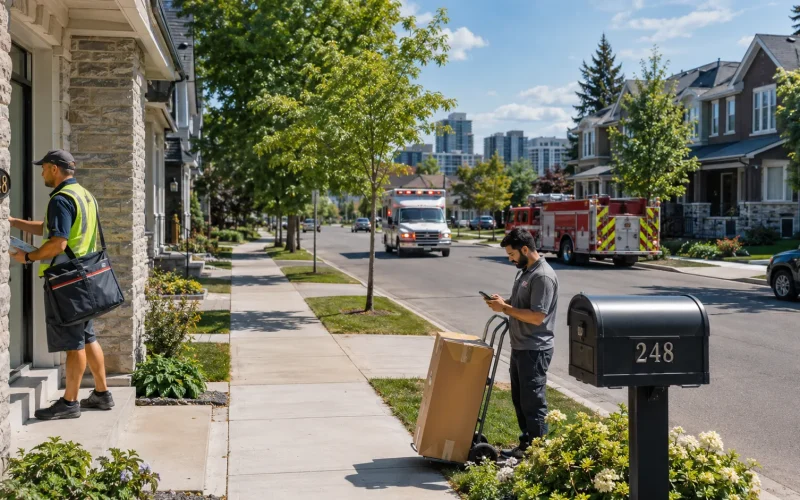
A civic number helps identify the exact physical location of a property. It is used by emergency responders, Canada Post, delivery drivers, utility companies, municipal departments, property assessment offices, real estate professionals, and mapping systems.
In everyday language, a civic number may also be called a house number, street number, municipal address number, or 911 address number, depending on the province, municipality, or context.
What Is a Civic Number in Canada?
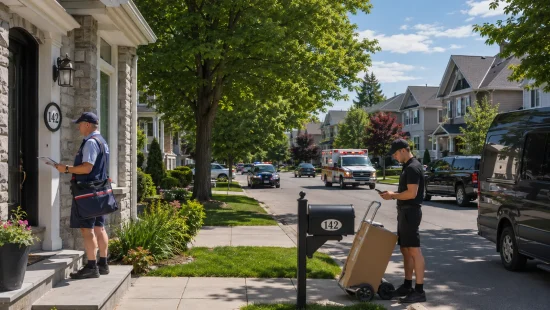
In Canada, a civic number is the official number attached to a property within a municipality, town, city, rural area, or regional district. It forms part of the property’s civic address, which usually includes:
- The civic number
- The street name
- The street type, such as Road, Street, Avenue, Drive, Crescent, Lane, or Boulevard
- A unit, apartment, suite, or building number, if applicable
- The municipality
- The province or territory
- The postal code
A simple civic address may look like this:
45 Maple Avenue
Toronto, ON M4B 1B3
Here, 45 is the civic number.
A unit address may look like this:
Unit 307
1200 King Street West
Toronto, ON M6K 1G4
Here, 1200 is the civic number, and 307 is the unit number.
The civic number is not randomly chosen by the property owner. It is normally assigned by the local municipality, regional government, 911 addressing office, planning department, building department, or another authorised civic addressing body.
Why Civic Numbers Matter?
Civic numbers are important because they make properties easier to identify quickly and accurately. A correct and visible civic number can affect safety, mail delivery, property records, public services, and day-to-day convenience.
1. Emergency Services
One of the most important uses of a civic number is emergency response. Police, firefighters, ambulance crews, and 911 dispatchers depend on accurate civic addresses to find homes, businesses, farms, apartment buildings, and rural properties.
If a civic number is missing, hidden, faded, placed in the wrong location, or hard to read at night, emergency responders may lose valuable time trying to locate the correct property.
2. Mail and Package Delivery
Canada Post and private couriers use civic addresses to deliver mail and parcels. The civic number helps identify the exact property, while the postal code helps identify the delivery area.
For mail and parcels, the civic number should be written clearly as part of the full address.
Example:
Sarah Wilson
86 Cedar Road
Halifax, NS B3H 2Y9
In this example, 86 is the civic number.
3. Property Taxes and Municipal Records
Municipalities use civic numbers for property assessment, tax billing, permits, land records, building files, zoning, and local services. A civic number helps connect a physical property to municipal databases and property records.
4. Utilities and Service Providers
Electricity, water, gas, internet, waste collection, insurance, and other service providers often use civic addresses to identify where services are installed or delivered.
A wrong civic number may delay a service connection, repair visit, inspection, or account update.
5. Navigation and Online Orders
GPS systems, online maps, food delivery apps, ride-sharing services, furniture deliveries, and home service companies all rely on correct civic addressing. A clear civic number makes it easier for others to find the right property without confusion.
Civic Number Example
Here are simple examples of civic numbers in Canadian addresses:
| Full Address Example | Civic Number |
| 123 Main Street, Calgary, AB | 123 |
| 45 Queen Street East, Toronto, ON | 45 |
| 800 Burrard Street, Vancouver, BC | 800 |
| 17 Lakeview Road, Halifax, NS | 17 |
| 2500-100 King Street West, Toronto, ON | 100 |
In the last example, 2500 is the suite or unit number, while 100 is the civic number of the building.
Is a Civic Number the Same as a Street Number?
In many Canadian contexts, civic number and street number mean the same thing. Both often refer to the number at the start of a street address.
For example:
72 Pine Street
The number 72 may be called the civic number, street number, house number, municipal number, or address number.
However, the clearest distinction is this:
- Civic number: the number assigned to the property or building
- Civic address: the full physical address, including civic number, street name, municipality, province, and postal code
- Postal code: the six-character Canada Post code used for mail sorting and delivery areas
- Unit or suite number: the number identifying a specific apartment, office, suite, or unit inside a larger property
So, a civic number is usually part of the address, but it is not the whole address.
Civic Number vs Civic Address vs Postal Code
These terms are related, but they are not the same.
| Term | Meaning | Example |
| Civic number | The property or building number | 123 |
| Street name | The road or street name | Main Street |
| Civic address | The full physical address | 123 Main Street, Ottawa, ON |
| Unit number | A specific apartment, office, or suite | Unit 405 |
| Postal code | Canada Post delivery code | K1A 0A1 |
| Rural route | A postal delivery route used in some rural areas | RR 2 |
| PO Box | A mailbox at a post office | PO Box 100 |
A civic number identifies a property. A postal code identifies a mail delivery area. A postal code cannot reliably identify a single property by itself.
Is a Civic Number the Same as a Postal Code?
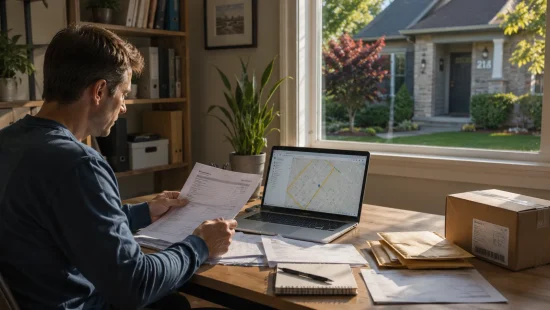
No. A civic number is not the same as a postal code.
A civic number identifies a specific property, such as a house, business, apartment building, farm entrance, or municipal lot.
A postal code is a six-character code used by Canada Post to sort and deliver mail. A postal code may cover one building, part of a street, multiple properties, a business, a rural route, or a delivery area, depending on the location.
Example:
123 Main Street
Ottawa, ON K1A 0A1
- Civic number: 123
- Street name: Main Street
- Postal code: K1A 0A1
You normally need both the civic address and postal code for accurate mail delivery.
What Is a Civic Number Used For?
A civic number is used for many official and practical purposes in Canada, including:
- 911 emergency response
- Police, fire, and ambulance dispatch
- Canada Post mail delivery
- Courier and package delivery
- Property tax records
- Building permits
- Land severance and subdivision applications
- Utility connections
- Insurance documents
- Mortgage and banking records
- Real estate listings
- Census and municipal planning
- Online shopping and delivery apps
- GPS and mapping systems
A correct civic number helps reduce mistakes when people, services, or government departments need to locate a property.
How Do Municipalities Assign Civic Numbers?
Civic numbers are usually assigned by the municipality or local addressing authority. The exact rules vary across Canada, but many municipalities follow a logical numbering pattern.
Common civic numbering practices may include:
- Odd numbers on one side of the road
- Even numbers on the opposite side
- Numbers increasing in a set direction from a starting point
- Extra number spacing in rural areas to allow for future development
- Unit numbers for apartments, condos, offices, and multi-unit buildings
- Letter suffixes, such as 12A or 12B, where needed to avoid confusion
- Separate civic numbers for some additional dwelling units, laneway suites, or detached units
The rules can vary by city, province, rural district, or regional municipality. Property owners should check with their local municipal office before assuming a number can be changed, added, or displayed in a different way.
How to Find Your Civic Number in Canada?
Most people can find their civic number by looking at their address or official property documents.
1. Check the Front of the Property
The civic number is often displayed on:
- The front of the house
- A mailbox
- A driveway marker
- A civic number sign
- A building entrance
- A unit directory
- A rural 911 sign
- A property gate or post
For safety, the number should be visible from the road where possible.
2. Check Your Official Documents
Your civic number may appear on:
- Property tax bills
- Utility bills
- Lease agreements
- Mortgage documents
- Home insurance documents
- Building permits
- Property assessment notices
- Municipal letters
- Canada Post address records
- Real estate documents
3. Use Canada Post’s Postal Code Tool
Canada Post provides an online tool that allows users to search for a postal code by entering a civic address, rural route address, or post office box address. This can help confirm the correct mailing version of an address.
4. Check Your Municipality’s Website
Many Canadian municipalities have online property search tools, GIS maps, civic addressing pages, or municipal addressing departments. These tools may help confirm the official address of a property.
Search phrases that may help include:
- “municipal addressing [city name]”
- “civic addressing [municipality name]”
- “property address lookup [city name]”
- “civic number request [town name]”
- “911 civic address [province or municipality]”
5. Contact Your Local Municipal Office
If you are unsure, contact your municipality, planning department, building department, 311 service, property records office, or local 911 addressing office.
This is especially important if:
- The property is newly built
- The land is vacant
- The property was recently severed or subdivided
- The driveway entrance has changed
- A new unit, suite, laneway home, or detached dwelling has been added
- There is confusion with a nearby property
- Emergency responders or delivery drivers struggle to find the address
How to Get a New Civic Address?
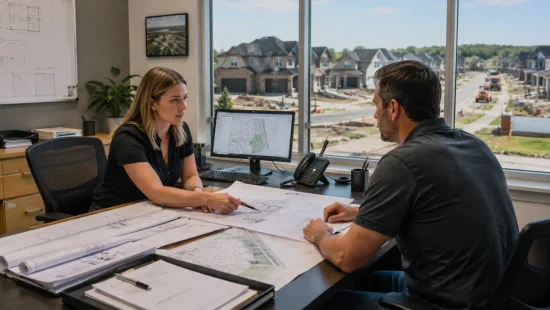
The process for getting a new civic address depends on where the property is located. In many cases, a new civic number is assigned during the building permit, subdivision, development approval, or municipal addressing process.
You may need a new civic address if:
- A new house or building is being constructed
- A vacant lot is being developed
- A property is being severed or subdivided
- A new unit or additional dwelling is created
- A laneway suite, garden suite, or detached additional dwelling unit is added
- The main entrance changes to a different street
- A rural property needs a 911 address or emergency access point
- An existing address causes confusion for emergency services or deliveries
The usual process is:
- Contact the local municipality or civic addressing authority.
- Ask whether the property needs a new or revised municipal address.
- Submit the required application or form.
- Provide any required documents, such as survey plans, building permit details, site plans, or entrance details.
- Pay the applicable fee, if required.
- Wait for the municipality or addressing authority to assign or confirm the official civic number.
- Display the number according to local rules.
Do not create your own civic number without approval. An unofficial number may cause problems with emergency services, mail delivery, permits, property records, insurance, and utilities.
Can a Civic Number Be Changed?
Yes, a civic number can sometimes be changed, but usually only by the municipality or local addressing authority.
A civic number may be changed if:
- There is a duplicate or confusing address
- The street numbering sequence is incorrect
- A property is subdivided or consolidated
- A new development changes the address layout
- A corner lot changes its main entrance
- A private road is renamed or officially addressed
- Emergency services need clearer wayfinding
- The municipality updates its addressing system
A property owner may be able to request a change, but approval is not guaranteed. Municipalities generally avoid unnecessary address changes because they affect property records, tax accounts, utilities, identification, banking, insurance, business listings, and mail delivery.
Civic Number Rules and Display Requirements
Civic number rules are set locally, so the exact display requirements vary across Canada. However, many municipalities require civic numbers to be:
- Clearly visible from the street or road
- Posted on the same side of the road as the property
- Large enough to read from a reasonable distance
- In a colour that contrasts with the background
- Not blocked by trees, snow, decorations, fences, vehicles, or signs
- Maintained in good condition
- Placed near the driveway entrance if the building is far from the road
- Visible during the day and, where possible, at night
Some municipalities set specific size requirements. For example, a municipality may require residential civic number digits to be at least 4 inches high, while larger commercial or rural properties may need larger signage.
Because requirements differ, property owners should check their local by-law, civic addressing page, 911 addressing office, or municipal building department.
Civic Numbers in Rural Areas
Civic numbers are especially important in rural Canada because properties may be far apart, hidden by trees, located on long driveways, or difficult to identify from the road.
In rural areas, civic numbers may also be connected to:
- 911 civic addressing
- Rural route delivery
- Emergency access point signs
- Farm entrances
- Private roads
- Long driveways
- Cottage roads
- Seasonal properties
- Fire service coverage areas
A rural mailing address may include both a civic address and a rural route identifier. Canada Post recognises civic addresses in rural areas, but some rural properties may still use rural route or post office box details for mail delivery.
If a rural property does not have a visible civic number, emergency responders and delivery drivers may struggle to locate it quickly.
What Is a Non-Civic Address?
A non-civic address usually refers to a location that does not yet have a formal civic number attached to a building or recognised property entrance. This may apply to certain vacant lots, undeveloped land, agricultural land, newly severed parcels, or properties that have not yet gone through the local addressing process.
The meaning can vary by municipality. In some places, vacant land is not assigned a civic address until a building permit, entrance permit, severance, consent, or development application is filed. In other places, an owner may be able to request a civic number for vacant land if there is a public safety, utility, or property identification reason.
If you own vacant land or are developing a property, contact the local municipality before using an address publicly.
How to Write a Canadian Address Correctly?
Canada Post recommends writing Canadian addresses in a clear format that supports mail sorting and delivery.
A basic civic address format is:
Recipient Name
Civic Number + Street Name
Municipality Province Postal Code
Example:
Maria Chen
123 Main Street
Ottawa ON K1A 0A1
For an apartment or unit:
Maria Chen
307-123 Main Street
Ottawa ON K1A 0A1
or
Maria Chen
Unit 307
123 Main Street
Ottawa ON K1A 0A1
For a rural route address with a civic address:
Maria Chen
123 Rural Road
RR 2
Smiths Falls ON K7A 4S5
When writing a postal code, use a space between the first three and last three characters. Do not use a hyphen.
Correct: K1A 0A1
Incorrect: K1A-0A1
Common Mistakes to Avoid
Avoid these common civic number and address mistakes:
- Confusing a unit number with a civic number
- Using an old address after a municipal renumbering
- Leaving the civic number off online orders
- Using only a postal code instead of the full civic address
- Displaying a number that is too small to read
- Letting trees, snow, decorations, or vehicles block the number
- Using an unofficial number not assigned by the municipality
- Forgetting to update banks, insurers, utilities, and government accounts after an address change
- Assuming a vacant lot automatically has a civic address
- Writing the postal code with a hyphen
What Should You Do After a Civic Number Changes?
If your civic number or municipal address changes, update your address with important organisations as soon as possible.
You may need to update:
- Canada Post mail forwarding or address records
- Provincial health card or driver’s licence records
- Banks and credit card providers
- Insurance companies
- Mortgage provider or landlord
- Utility companies
- Internet and phone providers
- CRA account details, where applicable
- Employer payroll records
- School, childcare, or medical records
- Online shopping accounts
- Business licences and listings
- Real estate, rental property, or property management records
Keep written confirmation from the municipality or addressing authority in case a bank, insurer, government department, or service provider asks why the address changed.
Is a Civic Number Legally Required?
In many Canadian municipalities and provinces, displaying an assigned civic number is required by by-law, local regulation, or 911 addressing rules. Even where the exact rules vary, keeping a visible civic number is a basic public safety measure.
A missing or unclear civic number can create problems for:
- Emergency response
- Mail and parcel delivery
- Utility servicing
- Building inspections
- Property identification
- Business deliveries
- Visitors and contractors
Because rules differ across Canada, check your local municipality’s civic addressing by-law or 911 addressing guidance for exact requirements.
Final Answer: What Is a Civic Number?
A civic number is the official number assigned to a property in Canada. It is usually the first number in a street address and helps identify the exact location of a home, business, unit, rural property, or building.
It is used for emergency services, mail delivery, property records, utilities, taxes, permits, real estate, and navigation. A civic number is not the same as a postal code, and it should be displayed clearly according to local municipal or 911 addressing rules.
If you are unsure about your civic number, check your official property documents, use Canada Post tools, or contact your local municipality.
Sources and Further Reading
- Canada Post – Canadian Addressing Guidelines
- Canada Post – Find a Postal Code Tool
- City of Toronto – Municipal Numbering of a Property
- Halifax Regional Municipality – Civic Addressing
- Government of Prince Edward Island – 911 Administration
- Government of Prince Edward Island – Displaying Civic Address Numbers
- City of Vancouver – Street Addressing
FAQs: What Is a Civic Number in Canada?
What is a civic number in simple words?
A civic number is the number assigned to a property in an address. In 123 Main Street, the civic number is 123. It helps identify the exact house, building, lot, or business location.
What is a civic number example?
In the address 56 Lake Road, Kingston, ON, the civic number is 56. In Unit 402, 900 Granville Street, Vancouver, BC, the civic number is 900, and the unit number is 402.
Is civic number the same as house number?
Yes, in many everyday situations, a civic number is the same as a house number. Municipalities may also call it a municipal number, address number, street number, or 911 number.
Is civic number the same as street number?
Usually, yes. Many Canadians use “civic number” and “street number” to mean the same number at the start of a street address. The more important difference is between the civic number, the full civic address, the unit number, and the postal code.
Is civic number the same as postal code?
No. A civic number identifies a specific property or building. A postal code is a Canada Post code used for mail sorting and delivery areas.
Where do I find my civic number?
You can usually find your civic number on the front of your property, mailbox, driveway sign, tax bill, utility bill, lease, mortgage documents, property assessment notice, municipal records, or Canada Post address lookup tools.
Who assigns civic numbers in Canada?
Civic numbers are usually assigned by the local municipality, planning department, building department, regional government, or 911 civic addressing authority. The responsible office depends on where the property is located.
Can I choose my own civic number?
Usually, no. Civic numbers are assigned according to municipal addressing rules. Choosing your own number can create confusion for emergency services, mail delivery, utilities, and property records.
Can I request a new civic number?
Sometimes. You may be able to request a new or revised civic number if there is a valid reason, such as a new building, property severance, additional dwelling unit, entrance change, duplicate address, or emergency response concern. Approval depends on local rules.
What is a non-civic address in Ontario?
In Ontario, a non-civic address may refer to land or a property location that does not yet have a formal municipal address, such as some vacant lots or undeveloped parcels. The exact meaning depends on the municipality. Contact the local municipal addressing or planning department for confirmation.
Do apartments have civic numbers?
Apartment buildings have civic numbers, and individual apartments have unit numbers. For example, in Apartment 705, 250 Queen Street, the civic number is 250, and the apartment number is 705.
Do rural properties have civic numbers?
Many rural properties in Canada have civic numbers, especially for 911 emergency response. Some rural addresses may also include rural route, lot, concession, post office box, or emergency access point information.
Why is my civic number different from my mailing address?
Some properties may have a physical civic address and a different mailing address, especially in rural areas, PO Box situations, business properties, or places where mail is delivered through a postal station. Use the correct address depending on whether the purpose is physical location, emergency response, or mail delivery.
What happens if my civic number is not visible?
If your civic number is not visible, emergency responders, delivery drivers, visitors, inspectors, and utility workers may have difficulty finding your property. Some municipalities may also issue warnings or enforcement notices if civic number display rules are not followed.
What is civic responsibility?
Civic responsibility is different from a civic number. Civic responsibility means the duties people have as members of a community, such as following laws, respecting neighbours, paying taxes, voting, keeping property safe, and helping maintain public safety. Displaying a clear civic number can be considered one small part of being a responsible property owner.