


Table of Contents Show
Who Is AI Actress Tilly Norwood?
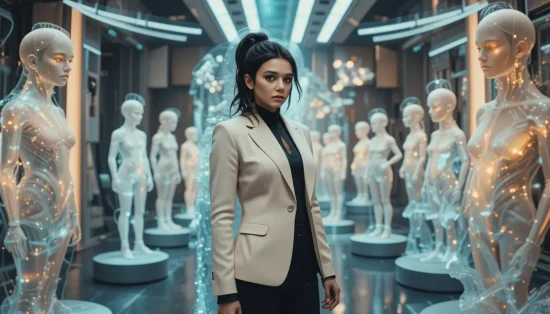
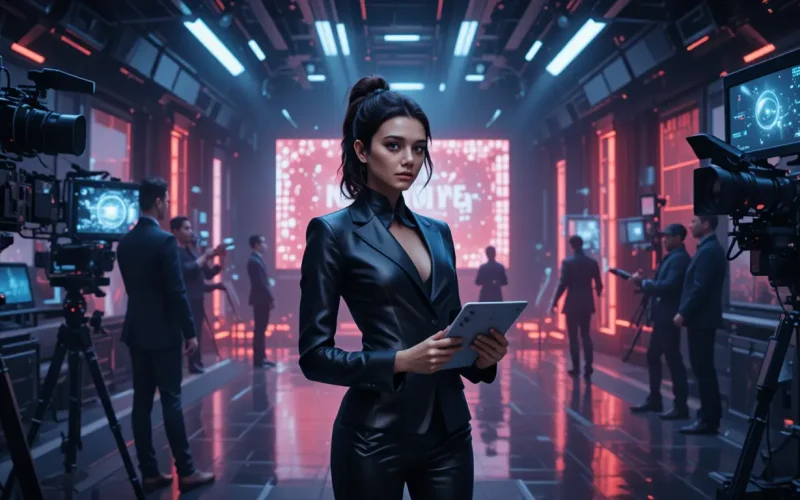
AI actress Tilly Norwood is a synthetic digital performer created using generative artificial intelligence. She was developed by Xicoia, the AI talent studio linked to Particle6, a London-based production company founded by Eline van der Velden.
Tilly Norwood is not a human actor. She is a computer-generated character designed to appear, speak and perform like a screen performer across videos, social media clips, music content and now a planned feature film. Her emergence has triggered one of the biggest entertainment-business debates around AI, creative labour, likeness rights and the future of acting.
According to recent entertainment coverage from People, Tilly Norwood is expected to make her feature film debut in a comedy-drama called Misaligned, produced by Particle6. The project is being positioned as a self-aware AI-led film about identity, fame, autonomy and the relationship between humans and artificial intelligence.
Why Is Tilly Norwood Important for the Entertainment Business?
Tilly Norwood matters because she represents more than a viral AI character. She sits at the centre of a much larger business shift in film and television: whether studios, agencies, streaming platforms and advertisers will use synthetic performers as commercial assets.
For entertainment companies, AI performers could appear attractive because they may reduce some production costs, allow faster content creation and give producers greater control over schedules, image rights and continuity. A synthetic performer does not age, fall ill, negotiate in the same way as a human star or require travel logistics in the traditional sense.
However, the business opportunity comes with serious risks. The rise of AI performers raises questions about consent, copyright, training data, union agreements, public trust and whether audiences will emotionally connect with characters that have no lived experience.
The controversy around Tilly Norwood shows that AI in entertainment is not only a technology story. It is also a labour, legal, branding and investment story.
What Is the Latest Update on Tilly Norwood?
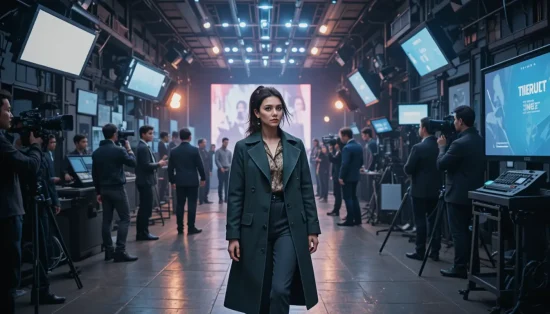
The latest major update is that Tilly Norwood is set to star in Misaligned, a feature film from Particle6. Coverage from CBS News reported that the AI-generated actor is being prepared for a full-length feature film, marking a significant step beyond short clips and online experiments.
The film is expected to take place in a digital world sometimes described as the “Tillyverse.” Its story reportedly follows Tilly as an AI being who begins to explore ambition, fame, emotion and self-awareness after encountering another artificial intelligence.
For the film industry, the move matters because it tests whether an AI-generated performer can move from publicity stunt to commercial product. If Misaligned finds buyers, distributors or audience traction, it could encourage more AI-led projects. If it fails to connect with viewers, it may reinforce the argument that human performance remains difficult to replace.
Why Has Tilly Norwood Sparked Backlash?
Tilly Norwood has faced strong criticism from actors, unions and entertainment professionals who fear that AI-generated performers could undermine human creative work.
The actors’ union SAG-AFTRA issued a statement arguing that Tilly Norwood is not an actor but a synthetic character generated by a computer program. The union’s concern is that AI performers may be trained on the work of real performers without clear consent, compensation or transparency.
This concern is especially sensitive because AI was already a major issue in Hollywood labour disputes. Actors and writers have pushed for stronger protections around digital replicas, synthetic performers, voice cloning and the use of creative work in AI training.
For businesses, the backlash is a warning. A company using AI talent may gain attention, but it may also face reputational damage, union disputes, boycott calls or legal uncertainty if it cannot clearly explain how the AI was created and what human work was used in the process.
Is Tilly Norwood a Real Actress?
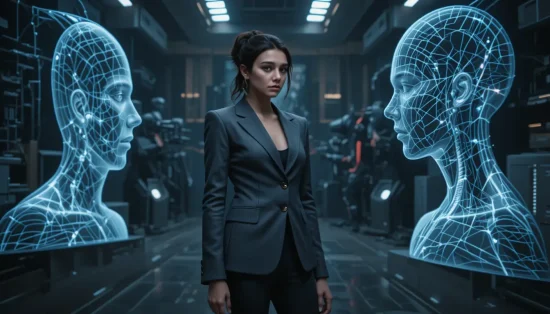
No. Tilly Norwood is not a real human actress. She is an AI-generated digital character.
That distinction matters. A human actor brings lived experience, emotion, physical presence, personal history, training and interpretation to a role. An AI performer is created through software, data, prompting, visual design, synthetic voice tools and human direction behind the scenes.
In business terms, Tilly Norwood is closer to an intellectual property asset, digital avatar, animated character or synthetic brand personality than a traditional actor. She can be marketed like a performer, but legally and ethically she is not the same as a human worker.
That is why many industry professionals object to calling her an “actress.” They argue that the term gives human status to a synthetic product and could weaken recognition of real performers’ labour.
What Does Tilly Norwood Mean for Film Production Costs?
One reason AI performers attract attention is the possibility of lower production costs. Producers may see potential savings in casting, scheduling, travel, reshoots, dubbing, localisation and promotional content.
A synthetic performer could theoretically be used across different languages, markets and formats without the same constraints that apply to human actors. For small studios or independent producers, this could look commercially appealing.
But the cost-saving argument is not simple. High-quality AI film production still requires human writers, directors, editors, visual artists, AI specialists, sound designers, legal advisers and brand strategists. Creating a convincing AI performer can also be expensive, especially if the project needs consistency, emotional credibility and legal protection.
The real business question is not whether AI can make content cheaper. It is whether AI can make content audiences actually want to watch.
How Could AI Actresses Affect Talent Agencies?
Tilly Norwood has also raised questions about the future role of talent agencies. If AI performers become marketable assets, agencies may be tempted to represent synthetic characters, license digital personalities or package AI talent for studios and brands.
That could create a new category of entertainment IP. Instead of representing only actors, models, influencers and creators, agencies could represent digital performers owned by production companies or AI studios.
However, this would be controversial. Human actors may see agency support for AI performers as a conflict of interest, especially if those agencies also represent real performers whose jobs could be affected. Some Hollywood figures have already suggested boycotting agencies that support AI-generated actors.
For agencies, the business risk is clear: signing AI talent may create short-term publicity but damage trust with human clients.
What Are the Legal Risks Around AI Actress Tilly Norwood?
The legal risks around AI performers are still developing. Key concerns include:
| Legal Issue | Why It Matters |
| Likeness rights | AI characters may resemble real people, raising identity and publicity-right concerns |
| Training data | AI systems may use copyrighted performances, images or voices without consent |
| Contracts | Studios may need to comply with union rules around synthetic performers |
| Disclosure | Audiences and commercial partners may need to know when a performer is AI-generated |
| Ownership | It must be clear who owns the AI character, voice, image, scripts and outputs |
| Reputation | Brands could face backlash if AI is seen as replacing human creative labour |
For producers and brands, the safest route is transparency. If an AI performer is used, businesses should clearly disclose it, document the creation process, avoid copying real performers, and seek legal review before commercial release.
Could AI Actresses Replace Human Actors?
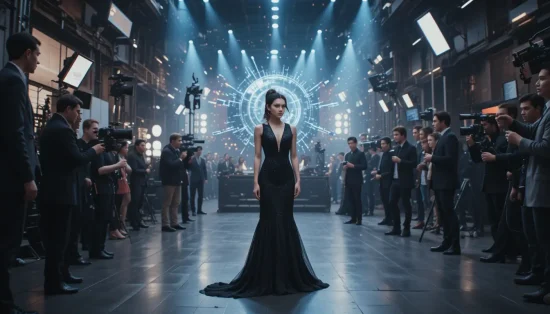
AI actresses may replace some limited uses of human performance, especially in low-budget digital content, advertising experiments, background visuals, localisation, synthetic hosting or short-form online campaigns.
But replacing leading human actors at scale is much harder. Audiences often connect with real actors because of their personality, interviews, public image, lived experience, awards history, scandals, fan communities and emotional authenticity. A synthetic character can be controlled, but that control may also make the character feel less real.
Tilly Norwood shows that AI performers can generate attention. The harder test is whether they can generate loyalty, box office value, streaming demand and long-term audience trust.
For now, AI is more likely to become a production tool than a full replacement for human actors. Businesses may use AI to support pre-visualisation, dubbing, visual effects, marketing assets, synthetic extras or experimental storytelling, while still relying on human performers for emotional credibility.
What Does Tilly Norwood Mean for Brands and Advertisers?
Brands may be interested in AI performers because they offer control. A synthetic spokesperson can be designed to match a campaign, speak multiple languages, appear in different formats and avoid some unpredictability associated with human celebrities.
However, the backlash around Tilly Norwood shows that brands must be careful. Using an AI actress in advertising could make a company look innovative, but it could also make the brand appear anti-worker or disconnected from creative communities.
Before using AI talent, brands should ask:
| Business Question | Why It Matters |
| Is the AI character clearly disclosed? | Hidden AI use can damage trust |
| Was the character trained ethically? | Consent and copyright risks can affect reputation |
| Does the campaign need human emotion? | AI may not suit sensitive or trust-based topics |
| Could unions or creators object? | Public criticism can overshadow the campaign |
| Is there a crisis plan? | AI campaigns can become controversial quickly |
For sectors such as fashion, gaming, entertainment, tech and youth marketing, AI characters may become more common. But for healthcare, finance, public services or emotionally sensitive campaigns, human credibility may remain more important.
Why is Tilly Norwood a Business Case Study?
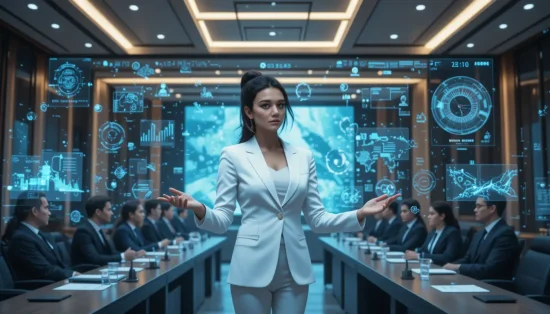
Tilly Norwood is useful as a business case study because she brings together several major commercial themes:
First, she shows how quickly generative AI can create new entertainment products. A character can now be built, branded, launched and promoted without a traditional casting process.
Second, she shows that technology adoption depends on public acceptance. Even if AI tools work technically, audiences, workers and industry partners may reject them if they feel unethical or exploitative.
Third, she shows that intellectual property is becoming more complex. A synthetic performer may involve software, prompts, image generation, voice generation, human creative input and training data, all of which need clear ownership.
Fourth, she shows that AI disruption is not limited to back-office tasks. It is now entering creative professions that rely on identity, emotion and cultural trust.
What Businesses Can Learn From the Tilly Norwood Debate
The biggest lesson for businesses is that AI adoption needs governance, not just experimentation. Companies exploring AI-generated people, avatars or performers should build clear policies before going public.
A responsible AI entertainment strategy should include:
| Area | Best Practice |
| Transparency | Tell audiences when a character is AI-generated |
| Consent | Avoid copying real people’s image, voice or performance style |
| Legal review | Check copyright, labour and contract risks |
| Human involvement | Credit human creators behind the AI output |
| Brand safety | Assess public reaction before launch |
| Ethics | Consider whether AI use replaces or supports human talent |
Businesses that treat AI as a shortcut may face backlash. Businesses that treat AI as a governed creative tool may have a better chance of earning trust.
Is Tilly Norwood the Future of Hollywood?
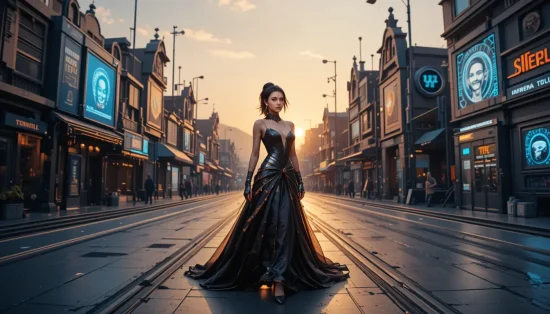
Tilly Norwood may not be the future of Hollywood by herself, but she is a sign of where the entertainment industry is heading. AI-generated performers, synthetic influencers, digital doubles and virtual production tools are likely to become more common.
The real future may not be “AI actors replacing human actors.” It may be a mixed model where human actors, AI tools, digital avatars and synthetic characters all exist in different parts of the production economy.
Some projects may use AI characters as experimental art. Others may use them for low-cost content. Big-budget films may use AI more carefully, especially where union contracts, audience expectations and star power matter.
For now, Tilly Norwood is less a proven movie star and more a symbol of a major industry dispute.
Conclusion
AI actress Tilly Norwood has become one of the clearest examples of how generative AI is entering the entertainment business. She is not simply a digital character; she is a test case for synthetic performers, AI talent studios, creative labour rights, production economics and audience trust.
For film studios, brands and agencies, the business opportunity is obvious. AI performers could offer speed, control and new creative formats. But the risks are just as clear. Without transparency, consent and strong governance, AI entertainment projects can quickly become reputational and legal problems.
Tilly Norwood may or may not become a successful screen presence, but her impact is already significant. She has forced the entertainment industry to ask a difficult question: in a business built on canada human performance, how much of the future should be synthetic?
FAQs About AI Actress Tilly Norwood
Who created Tilly Norwood?
Tilly Norwood was created by Eline van der Velden through Xicoia, the AI talent studio linked to Particle6.
Is Tilly Norwood a real person?
No. Tilly Norwood is an AI-generated digital character, not a human actress.
What film is Tilly Norwood starring in?
Tilly Norwood is expected to star in Misaligned, a comedy-drama feature film from Particle6.
Why is Tilly Norwood controversial?
She is controversial because actors and unions fear AI performers could replace human workers, use real performers’ work without consent, and reduce the value of human creativity.
What did SAG-AFTRA say about Tilly Norwood?
SAG-AFTRA said Tilly Norwood is not an actor and raised concerns about synthetic performers being trained on the work of real performers without clear consent or compensation.
Can AI actresses replace real actors?
AI actresses may be used in some forms of digital content, advertising and experimental film, but replacing human actors fully is unlikely in the near term because audiences still value real emotion, authenticity and human connection.
Why are businesses interested in AI performers?
Businesses may be interested because AI performers can offer control, scalability, multilingual use, flexible branding and possible cost savings.
What are the risks of using AI performers?
The main risks include copyright disputes, likeness claims, union objections, audience backlash, disclosure problems and brand trust issues.