



Table of Contents Show
Last Updated On 07.10.2026
Preparing for the SGI practice test is one of the first steps towards becoming a licensed driver in Saskatchewan. The practice test is not a road test and it is not a separate licence examination.
It is a preparation tool designed to help learners understand the types of road rules, signs and driving situations they need to know for the Class 7 knowledge exams.
For 2026, learners should prepare for two knowledge components, Basic and Sign, as well as a vision test. Passing the knowledge stage allows an eligible applicant to obtain a Class 7 learner’s licence and begin gaining supervised driving experience.
Studying the Saskatchewan driving rules carefully is important because memorising practice-test answers alone may not prepare you for differently worded questions on the real examination.
What Is The SGI Practice Test?
The SGI practice test helps Saskatchewan learners prepare for the knowledge examinations required for a Class 7 licence.
Questions generally test your understanding of:
- Traffic signs and signals
- Right-of-way rules
- Intersections
- Safe following and stopping
- Lane use
- Passing
- Railway crossings
- Pedestrian safety
- Parking
- Hazard awareness
- Winter driving
- Defensive driving
The practice quiz itself does not give you a licence. You must complete the required official examinations and meet the eligibility and identification requirements.
SGI Knowledge Test Quick Facts For 2026
| Requirement | Current Details |
| Minimum age | 16, or 15 through approved high school driver education |
| Knowledge components | Basic and Sign |
| Basic test | 20 questions |
| Sign test | 30 questions |
| Passing grade | 80% |
| Retake rule | Only the failed component needs to be rewritten |
| Attempts | Maximum once per day |
| Written result validity | One year |
| Vision test | Required |
| Class 7 learner period | Minimum nine months |
| Cellphones during exam | Not permitted |
| Knowledge test fee | Generally $25 for each written examination attempt |
Fees can change, so applicants should confirm the amount displayed when arranging an examination.
What Should You Study For The SGI Knowledge Test?

Do not focus only on recognising signs. The Basic section requires you to understand how Saskatchewan road rules apply in real driving situations.
Give extra attention to:
- Controlled and uncontrolled intersections
- Yielding to pedestrians
- Stop and yield signs
- Lane markings
- Passing restrictions
- Railway crossings
- School and playground areas
- Emergency vehicles
- Following distance
- Poor weather and reduced visibility
- Sharing the road with cyclists
- Safe turning and lane changing
For signs, learn what the shape, colour and symbol indicate instead of simply memorising individual pictures. Regulatory signs usually tell drivers what they must or must not do, while warning signs alert drivers to hazards or changing road conditions ahead.
40-Question SGI Practice Test
The following is a study exercise, not a copy of the official examination.
Rules Of The Road
- Who has priority when a pedestrian is legally crossing?
Answer: The pedestrian. Drivers must yield. - What should you do before changing lanes?
Answer: Signal, check mirrors, check the blind spot and move only when safe. - Can a Class 7 learner drive without supervision?
Answer: No. A qualified supervising driver is required. - Where should the supervising driver sit?
Answer: In the front passenger seat nearest the learner. - Can a learner use a hands-free cellphone while driving?
Answer: No. GDL drivers cannot use hand-held or hands-free communication devices. - What should you do at an uncontrolled intersection?
Answer: Reduce speed, observe carefully and apply right-of-way rules. - Should you increase following distance on snow or ice?
Answer: Yes. Reduced traction increases stopping distance. - What should you do before turning?
Answer: Signal early, check traffic and pedestrians, then turn when safe. - Can you exceed the speed limit while passing?
Answer: No. The speed limit still applies. - What should you do when visibility becomes poor?
Answer: Reduce speed and increase space around the vehicle. - Why are shoulder checks important?
Answer: They help identify vehicles or road users in blind spots. - What should you do when approaching a railway crossing?
Answer: Look, listen and be prepared to stop. - Should you follow another vehicle closely in winter?
Answer: No. Leave additional stopping distance. - What should you do when an emergency vehicle requires you to yield?
Answer: Move safely as required and allow it to pass. - Who must wear available seatbelts?
Answer: Occupants must comply with Saskatchewan seatbelt requirements. - Can a learner drive after consuming alcohol?
Answer: No. GDL drivers have zero alcohol tolerance. - What is the safest response when unsure whether a gap is large enough?
Answer: Wait for a safer opportunity. - Should mirrors replace shoulder checks?
Answer: No. Mirrors cannot show every blind spot. - What should you do before backing?
Answer: Check around the vehicle and continue observing while reversing. - Why should speed be reduced before a curve?
Answer: Entering too quickly reduces control and available reaction time.
Road Signs And Markings
- What does an octagonal sign indicate?
Answer: Stop. - What does an inverted triangular sign mean?
Answer: Yield. - What is the purpose of warning signs?
Answer: To alert drivers to hazards or changing road conditions. - What do regulatory signs communicate?
Answer: Traffic laws, restrictions and required actions. - What does a no-entry sign tell drivers?
Answer: Vehicles must not enter from that direction. - What should you do when a sign warns of a sharp curve?
Answer: Reduce speed before entering the curve. - What does a railway-crossing warning mean?
Answer: Be alert for tracks and approaching trains. - What does a pedestrian-crossing sign warn about?
Answer: Pedestrians may be crossing ahead. - What does a school-related warning sign indicate?
Answer: Expect children and follow the applicable local restrictions. - What does a construction warning require from drivers?
Answer: Slow down, watch for workers and follow temporary traffic controls. - What does a solid lane line generally indicate?
Answer: Crossing may be restricted or discouraged depending on the marking. - What does a broken lane line normally allow?
Answer: Crossing when permitted and safe. - What should you do when you see a merge sign?
Answer: Prepare for traffic streams to combine safely. - What does a slippery-road warning mean?
Answer: Traction may be reduced, especially in poor weather. - What does a traffic-signal-ahead sign indicate?
Answer: Traffic lights are approaching. - Why should sign shapes be studied?
Answer: Shape can help identify the type of instruction or warning quickly. - What does a lane-ending warning mean?
Answer: Prepare to merge safely before the lane ends. - What should you do when approaching a stop sign?
Answer: Make a complete stop and proceed only when safe. - Does a green traffic light always mean you can immediately proceed?
Answer: No. The intersection must still be clear and safe. - What is the best approach when you do not recognise a road sign during practice?
Answer: Review its meaning and category rather than guessing repeatedly.
Aim to score 90% or more consistently on practice questions before booking your official examination. This gives you some margin above the required passing standard.
How To Prepare For The SGI Practice Test?
A short structured plan is usually more effective than trying to memorise the handbook in one sitting.
3-Day Study Plan
- Day 1: Rules of the road, intersections and right of way
- Day 2: Signs, markings and hazard recognition
- Day 3: Practice quizzes, review mistakes and repeat weak topics
7-Day Study Plan
Spend one day each on road rules, signs, intersections, parking and passing, hazardous conditions and mixed practice. Use the final day for a full review.
When reviewing wrong answers, identify why the answer was incorrect. Understanding the rule makes it easier to handle differently worded questions.
What Do You Need On Test Day?
Bring original identification documents that meet the requirements for confirming your name, date of birth and signature. Residency documentation may also be required depending on your circumstances.
First-time drivers aged 15 to 17 must also meet the applicable parent or guardian consent requirements. Photocopies should not be relied upon where original identification is required.
A vision assessment is also part of the licensing process and may include:
- Visual acuity
- Field of vision
- Distance judgment
If corrective lenses are required to meet the standard, the licence may include a restriction requiring them while driving. Electronic devices and cellphones cannot be used in the knowledge-test area.
If you fail only one knowledge component, you normally rewrite only that component. Knowledge exams can be attempted only once per day, while successful written results remain valid for one year.
From Class 7 Learner To Full Class 5 Licence
Saskatchewan uses Graduated Driver Licensing.
| Stage | Minimum Period | Main Requirement |
| Class 7 Learner | 9 months | Supervised driving and required education |
| Class 5 Novice 1 | 6 months | Begins after passing the road test and licence update |
| Class 5 Novice 2 | 12 months | Must complete required incident-free period |
| Experienced Class 5 | After GDL completion | Full experienced-driver status |
Class 7 learners must complete required driver education before progressing. This may be completed through approved high school driver education or qualifying instruction from a certified instructor.
GDL drivers are also subject to restrictions including zero alcohol tolerance, passenger limits, cellphone restrictions and restrictions on acting as a supervising driver.
What Happens During The Class 5 Road Test?
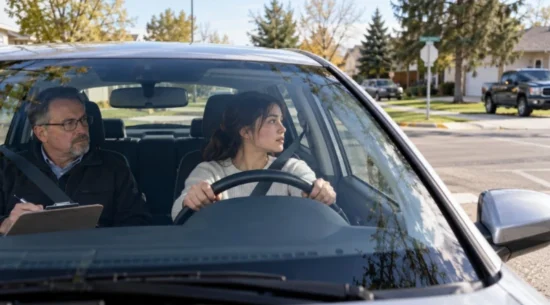
The road test is separate from the SGI practice test and evaluates your actual driving ability.
You may be assessed on:
- Starting and stopping
- Turns
- Lane positioning
- Shoulder checks
- Intersections
- Traffic signals
- Hazard awareness
- Parallel parking
- Backing
- Two-point turns
- Speed selection
You must provide an appropriate vehicle.
Before the test, check the horn, signals, brake lights, headlights when required, wipers, defrost system, seatbelts, airbags, speedometer, licence plate, doors and windshield.
A road test can be refused or rescheduled if you arrive late, do not meet licence or training requirements, have not paid the required fee or bring an unsafe vehicle.
Serious errors that can result in failure include speeding, failing to stop, failing to yield, disobeying traffic lights, requiring examiner assistance or being substantially responsible for a collision.
After an unsuccessful Class 5 road test, there is generally a two-week waiting period before another attempt.
New Residents Moving To Saskatchewan
Not every newcomer automatically needs to start with a Class 7 test.
Saskatchewan recognises licences from certain Canadian and international jurisdictions. New Saskatchewan residents can generally continue using a valid out-of-province licence for up to 90 days after becoming residents.
Depending on where the licence was issued and the driver’s previous experience, an exchange may be possible or some learner requirements may be waived.
Drivers coming from jurisdictions that are not recognised may need knowledge, vision or road testing.
What About Class 1A, MELT And Commercial Drivers?
The standard SGI practice test is mainly useful for Class 7 and basic Class 5 knowledge.
Commercial licensing follows additional requirements. Class 1 applicants must meet age, medical and experience requirements and complete Mandatory Entry-Level Training before progressing through the required commercial testing.
Novice GDL drivers cannot obtain commercial licence classes until they meet the necessary licensing requirements.
Employers hiring drivers should therefore check both the licence class and any novice restrictions instead of assuming that possession of a Saskatchewan licence automatically permits commercial driving.
Conclusion
The SGI practice test is most useful when it forms part of a wider study plan rather than becoming the only material you use.
Saskatchewan learners need to understand both road rules and traffic signs, pass the required knowledge and vision examinations, complete the Class 7 learning period and required training, and eventually demonstrate their driving ability during the Class 5 road test.
Practise until you can explain why an answer is correct, not simply recognise it from previous attempts. That approach prepares you for the real examination and, more importantly, helps build the knowledge needed for safe driving after you receive your licence.
FAQs
How Many Questions Are On The SGI Knowledge Test?
Current testing information separates the Class 7 requirement into a 20-question Basic component and a 30-question Sign component.
What Score Do You Need To Pass?
The knowledge examinations use an 80% passing standard.
What Happens If I Fail One Part?
You normally need to rewrite only the knowledge component you failed.
Can You Take The SGI Test More Than Once A Day?
No. Knowledge examinations can generally be attempted only once per day.
How Long Are Passed Knowledge Test Results Valid?
Successful written examination results are valid for one year.
Can You Use A Phone During The Knowledge Test?
No. Cellphones and other electronic devices are not allowed in the test area.
How Long Must You Hold A Class 7 Licence?
A Class 7 learner must normally remain in that stage for at least nine months before becoming eligible to progress.
Is The Practice Quiz The Same As The Real Test?
No. Practice questions are preparation tools. Learners should understand the underlying road rules rather than expect identical questions.