




Table of Contents Show
Last Updated: 15.10.2026
Ontario vehicle registration renewal is considerably different from the process drivers followed only a few years ago.
For many vehicle owners, there is no longer a need to remember an annual renewal date, buy a licence plate sticker or manually complete the renewal process.
Eligible Ontario licence plates now renew automatically, provided the vehicle has valid insurance and there are no outstanding fines, fees or tolls preventing renewal.
However, automatic renewal does not apply to every vehicle, and some owners still have to renew manually.
Understanding the difference is important because a vehicle still needs a valid licence plate to be legally driven in Ontario.
This article explains how Ontario vehicle registration renewal works in 2026, who qualifies for automatic renewal, the current costs and what happens when a renewal cannot be completed.
What Are The New Changes To Ontario Vehicle Registration Renewal In 2026?
There has not been a completely new Ontario renewal system introduced specifically in 2026. Instead, drivers in 2026 are operating under major changes introduced during the previous few years.
One of the biggest changes took effect on July 1, 2024, when Ontario introduced automatic licence plate renewals for eligible vehicles.
Instead of requiring eligible owners to manually renew their plates, ServiceOntario now attempts the renewal automatically 90 days before the plate expires.
The main features of the current 2026 system include:
- Automatic Renewal: Eligible licence plates are renewed 90 days before expiry
- One-Year Validity: An automatically renewed plate remains valid for another year
- No Renewal Sticker: Eligible vehicles no longer receive a physical validation sticker
- No Renewal Fee: Eligible passenger vehicle plate renewals remain free
- Insurance Verification: Valid vehicle insurance is required for automatic renewal
- Fine And Toll Checks: Outstanding qualifying fines, fees or tolls can stop automatic renewal
- Electronic Records: Law enforcement can see electronically when a plate has been renewed
- Renewal Notifications: Drivers are contacted if an eligible plate cannot automatically renew
These changes build on the removal of licence plate renewal fees and stickers in March 2022. Ontario’s current renewal system therefore looks very different from the sticker-based process that existed before 2022.
Does Ontario Vehicle Registration Renew Automatically In 2026?
Yes, many Ontario licence plates renew automatically in 2026.
ServiceOntario attempts an eligible licence plate renewal 90 days before its expiry date. If all requirements are satisfied, the owner does not need to submit a separate renewal application.
When automatic renewal succeeds, the registration is valid for another year. ServiceOntario does not normally contact the owner just to confirm a successful automatic renewal.
That makes it important to understand that receiving no renewal notice does not necessarily mean anything has gone wrong.
Vehicle owners who are unsure whether their plate is currently valid can check its status through ServiceOntario.
Automatic renewal also does not replace the broader obligation to keep vehicle records accurate.
Different requirements apply when buying, selling or putting a vehicle into another person’s name, which is why the process for transferring vehicle ownership in Ontario should not be confused with an ordinary plate renewal.
Who Qualifies For Automatic Vehicle Registration Renewal In Ontario?
Ontario currently provides automatic licence plate renewal for eligible:
- Passenger Vehicles
- Light Commercial Vehicles Under 3,000 kg
- Motorcycles
- Mopeds
Simply owning one of these vehicles does not guarantee renewal.
For automatic renewal to succeed, the vehicle must have valid insurance and the owner must clear applicable outstanding driver fines, vehicle fines, penalties and tolls.
In simple terms, an ordinary personal passenger vehicle with valid insurance and no renewal-blocking debts will generally be renewed automatically.
Insurance is particularly important because Ontario requires vehicles being driven on public roads to be insured.
Drivers comparing the ongoing cost of keeping a car on the road may also want to understand how much car insurance costs in Ontario, as insurance remains separate from the now-free eligible licence plate renewal.
Which Vehicles Still Need Manual Registration Renewal?
Automatic renewal does not cover every Ontario vehicle.
According to Ontario’s current rules, licence plates are not automatically renewed for:
| Vehicle Type | Renewal Method |
| Commercial And Business Vehicles | Manual Renewal |
| Motorhomes | Manual Renewal |
| Vehicles Manufactured Before 1983 | Manual Renewal |
| Buses | Manual Renewal |
| School Buses | Manual Renewal |
| Snowmobiles | Manual Renewal |
These owners must continue renewing through the applicable ServiceOntario process. Heavy commercial vehicles also use a separate renewal service.
Owners should therefore avoid assuming that the automatic system applies simply because Ontario generally advertises automatic plate renewal.
How Does Ontario’s Automatic Licence Plate Renewal Process Work?
The process largely takes place without the driver having to submit an application.
About 90 days before an eligible plate expires, the system checks whether the vehicle and owner meet the renewal requirements.
The process generally works like this:
- ServiceOntario Checks Eligibility: The system determines whether the plate belongs to a vehicle covered by automatic renewal.
- Insurance Is Checked: The vehicle must have valid insurance.
- Outstanding Amounts Are Checked: Applicable fines, fees, penalties and tolls must be cleared.
- The Plate Is Renewed: If all requirements are met, the plate automatically receives another year of validity.
- The Electronic Record Is Updated: Police can see the new plate status electronically.
- No Sticker Is Issued: There is no physical passenger vehicle validation sticker to attach.
A successful automatic renewal does not normally generate a confirmation notice.
Why Might Your Ontario Licence Plate Not Renew Automatically?
Automatic renewal can fail when ServiceOntario identifies a problem that must first be resolved.
Common reasons include:
| Reason | What To Do |
| Vehicle Insurance Is Not Valid | Contact the insurer and make sure coverage is active |
| Defaulted Driver Fines Or Fees | Pay the amount owed |
| Outstanding Vehicle Fines | Resolve the outstanding amount |
| Unpaid Applicable Tolls | Pay the toll balance |
| Vehicle Is Not Eligible | Complete manual renewal |
| Vehicle Information Needs Attention | Contact or visit ServiceOntario |
Drivers concerned about an unresolved offence should make sure they understand how to check traffic tickets in Ontario, although different ticket types and municipalities can use different systems.
If a plate cannot automatically renew, Ontario provides advance notifications to affected owners.
Drivers signed up for digital ServiceOntario renewal reminders can be contacted 90, 45 and 10 days before expiry.
Those who have not signed up for digital reminders can receive a mailed notice 90 days before expiry.
If the problem remains unresolved and the plate expires, Ontario can send another notice approximately 72 hours after expiry.
How Can You Check If Your Ontario Vehicle Registration Has Expired?
Ontario provides an online service that allows eligible vehicle owners to check whether their licence plate is currently valid or expired.
The online plate-status service is available for vehicles weighing 3,000 kg or less, including:
- Passenger Vehicles
- Light Commercial Vehicles
- Motorcycles
- Mopeds
Drivers generally need their licence plate number and vehicle permit information to check their status.
Checking can be worthwhile even with automatic renewal, particularly if there has recently been a problem involving insurance, outstanding fines or tolls.
If the status cannot be checked online, the owner can visit a ServiceOntario centre.
How Do You Manually Renew Vehicle Registration In Ontario?
A manual Ontario licence plate renewal may still be necessary if the vehicle is not covered by automatic renewal or if an automatic renewal fails.
For applicable vehicles, renewal can generally be completed online or at a ServiceOntario centre. Ontario’s online renewal service says the process typically takes about six to eight minutes.
Before attempting manual renewal, the owner should:
- Confirm Valid Insurance
- Clear Outstanding Fines And Fees
- Pay Applicable Tolls
- Check That The Address Is Current
- Have The Vehicle Permit Information Ready
- Have The Odometer Reading Available
If automatic renewal previously failed because of insurance or outstanding amounts, fixing the underlying problem does not necessarily mean the expired registration should simply be ignored.
The owner should complete the required manual renewal and verify that the plate is valid.
What Documents And Information Are Needed For Renewal?
The information required depends partly on the type of vehicle and the method used to renew it.
ServiceOntario’s current online renewal process may require:
- Licence Plate Number
- Vehicle Permit Number
- Odometer Information
- Applicable Insurance Information
- Payment Card If A Fee Applies
The vehicle permit number is found on the green Ontario vehicle ownership document.
The requirements for renewal should not be confused with first-time vehicle registration.
Registering a newly purchased vehicle can involve additional documents such as a bill of sale, proof of insurance, ownership documents and, where applicable, a Safety Standards Certificate.
How Much Does Ontario Vehicle Registration Renewal Cost In 2026?
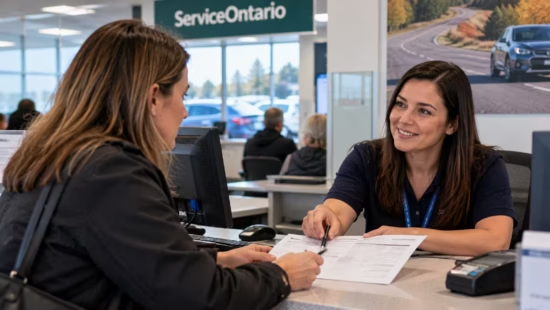
For eligible passenger vehicles, the standard licence plate renewal validation fee remains $0 in 2026.
Ontario eliminated the passenger vehicle licence plate renewal fee effective March 13, 2022.
Before the change, the annual passenger vehicle validation fee was generally $120 in Southern Ontario and $60 in Northern Ontario.
However, licence plate renewal should not be confused with every other vehicle-related ServiceOntario transaction.
| Transaction | 2026 Position |
| Eligible Passenger Plate Renewal | $0 |
| Automatic Plate Renewal | $0 |
| Licence Plate Sticker | Not Required For Eligible Passenger Vehicles |
| Vehicle Permit, Replacement Plates Or Other Transactions | Separate Fees May Apply |
| Certain Commercial Or Specialty Vehicles | Fees Depend On Vehicle And Transaction |
Therefore, a driver might still have to pay ServiceOntario for another transaction even though the standard eligible plate renewal itself costs nothing.
What Happens If Your Ontario Vehicle Registration Has Already Expired?
An expired registration should be dealt with promptly because a vehicle requires a valid plate and insurance to be legally driven on Ontario roads.
If the licence plate has already expired, the owner should first determine why it failed to renew.
This may involve:
- Checking Plate Status
- Confirming Vehicle Insurance
- Paying Outstanding Driver Fines
- Paying Vehicle Fines Or Penalties
- Clearing Applicable Tolls
- Completing Manual Renewal
Ontario states that an expired plate can still be renewed online or in person once applicable fines and tolls have been paid and valid insurance is in place.
Drivers should confirm that the plate is valid before returning the vehicle to the road rather than assuming payment of an outstanding amount automatically completes every remaining renewal step.
Do Business And Commercial Vehicles Automatically Renew In Ontario?
Business owners need to pay particular attention to this distinction.
Ontario’s current automatic-renewal page lists commercial and business vehicles among the plates that do not automatically renew. These owners must continue to use the applicable manual renewal process.
Heavy commercial vehicles also have their own renewal system and cannot use the standard online passenger-vehicle renewal platform.
For a business, allowing a registration to expire can have operational consequences if the vehicle is needed for deliveries, employee travel, customer visits or other daily activities.
Businesses that operate several vehicles should therefore maintain accurate renewal and insurance records rather than assuming every plate will be renewed automatically.
Do Ontario Drivers Still Need Licence Plate Stickers In 2026?
Most ordinary Ontario passenger vehicle owners do not need licence plate validation stickers in 2026.
The Ontario government removed licence plate renewal fees and stickers for eligible passenger vehicles and several other vehicle types in March 2022.
Automatic renewal later reduced the need for owners of eligible vehicles to perform the renewal themselves.
This means drivers should distinguish between two separate changes:
2022: Ontario eliminated applicable plate renewal fees and physical stickers.
2024: Ontario introduced automatic annual renewal for eligible licence plates.
A physical sticker is therefore no longer what proves the registration status of an eligible passenger vehicle. The registration is maintained electronically.
Do You Need To Update Your Address Before Renewing?
Yes. Ontario law requires vehicle owners to update their driver’s licence and vehicle permit information within six days of an address change.
This becomes particularly important for vehicle registration because ServiceOntario may send renewal-related notices by mail when an automatic renewal cannot be completed.
Someone who recently moved should therefore complete their ServiceOntario change of address rather than relying on mail forwarding or assuming their vehicle records automatically changed.
ServiceOntario’s online licence plate renewal service also instructs people who have changed address to update it before proceeding with the renewal.
How Have Ontario Vehicle Registration Rules Changed Over The Years?
Ontario has gradually moved from physical stickers and manual renewals towards a more automated electronic system.
| Period | Main Renewal Rule |
| Before March 2022 | Eligible vehicle owners generally paid validation fees and used licence plate stickers |
| March 2022 | Ontario eliminated renewal fees and stickers for eligible vehicles |
| 2022 To June 2024 | Eligible owners still generally had to renew manually even though renewal was free |
| July 1, 2024 | Automatic licence plate renewal began for eligible vehicles |
| 2026 | Eligible plates continue to renew automatically 90 days before expiry when requirements are satisfied |
The July 2024 change was particularly significant because the responsibility shifted from eligible owners remembering to renew manually to ServiceOntario attempting the renewal automatically.
However, automatic renewal has not removed the owner’s responsibilities altogether.
Drivers still need valid insurance, must address outstanding renewal-blocking amounts and must keep personal and vehicle information current.
FAQs About Ontario Vehicle Registration Renewal
1. Is Ontario Vehicle Registration Renewal Free In 2026?
For eligible passenger vehicles, the standard licence plate renewal fee is $0. Other vehicle types and separate ServiceOntario transactions may still have fees.
2. How Often Does An Ontario Licence Plate Automatically Renew?
An eligible plate automatically renews for one year at a time, with ServiceOntario attempting renewal about 90 days before expiry.
3. Will ServiceOntario Tell Me When My Plate Automatically Renews?
Normally, no. Ontario states that owners are not contacted simply to confirm a successful automatic renewal.
4. Can Unpaid Fines Stop My Licence Plate From Renewing?
Yes. Defaulted driver fines and applicable outstanding vehicle fines, fees, penalties or tolls can prevent automatic renewal until they are resolved.
5. Can I Renew An Already Expired Ontario Licence Plate?
Yes. An expired plate can still be renewed after applicable fines or tolls are cleared and the vehicle has valid insurance.
6. Does A Business Vehicle Automatically Renew In Ontario?
Not generally. Ontario lists commercial and business vehicles among the categories that must continue using the applicable manual renewal process.
7. Do I Need A Licence Plate Sticker In Ontario In 2026?
Most eligible passenger vehicle owners no longer need a physical licence plate validation sticker. Plate validity is maintained electronically.






Comments 1